How Fastory turned limited production bandwidth into a studio‑level creative engine
Discover how Fastory transformed limited production capabilities into a studio-level creative engine using Scenario.
100x
Faster Delivery
Centralized
AI Workflows
With one designer
Studio Scale Power
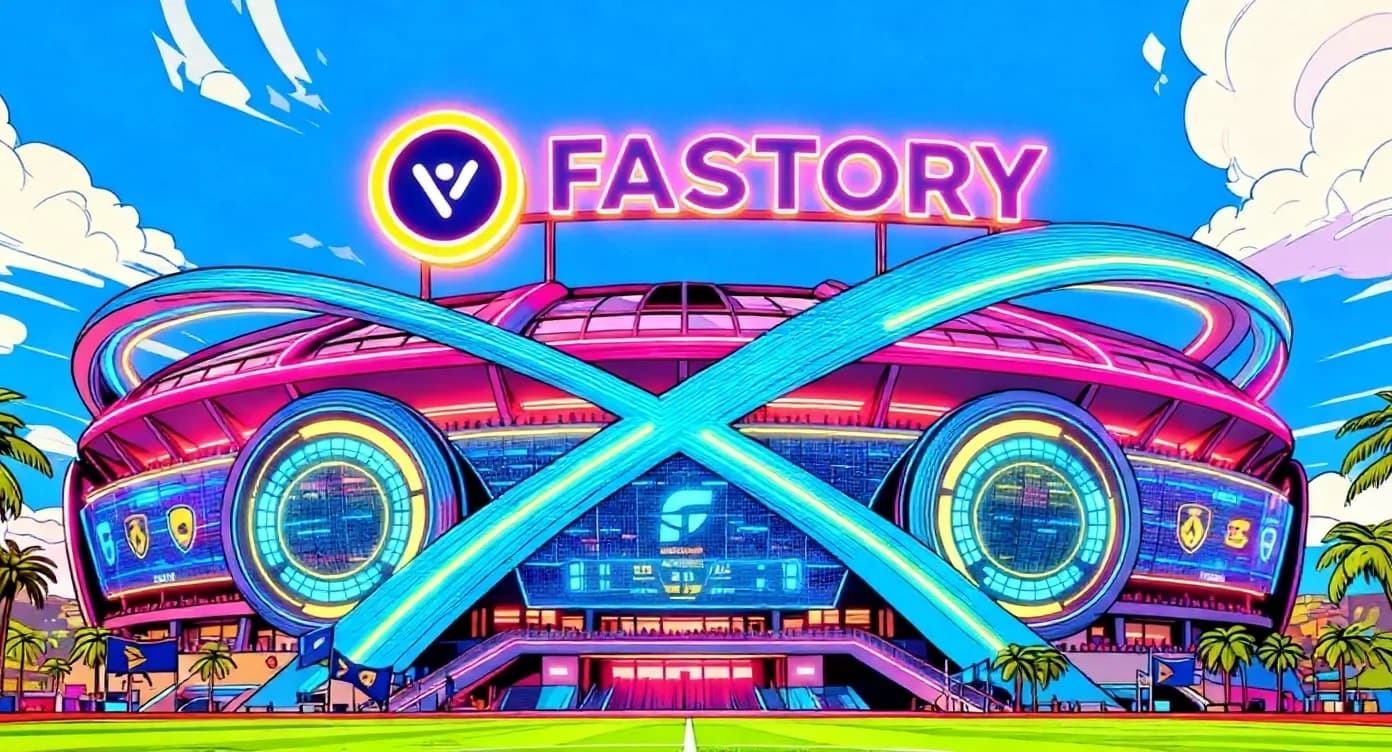
Introduction
In sports entertainment, fan experience is everything. Fastory, a fan engagement solution based in Paris with a 15‑person team spread across Lyon, Bordeaux, and Marseille, builds interactive mobile games for sports brands like the Ligue 1, Paris 2024, Olympique de Marseille, and Roland‑Garros.
The challenge was not just to produce more content. It was to design richer, more cinematic fan experiences at the pace of live sports, without scaling headcount or juggling a dozen tools.
By leaning into Scenario, Fastory turned that constraint into an advantage. Motion designer Marco Civolani now operates like a full creative studio, combining 3D, motion design, and generative models inside a single environment.
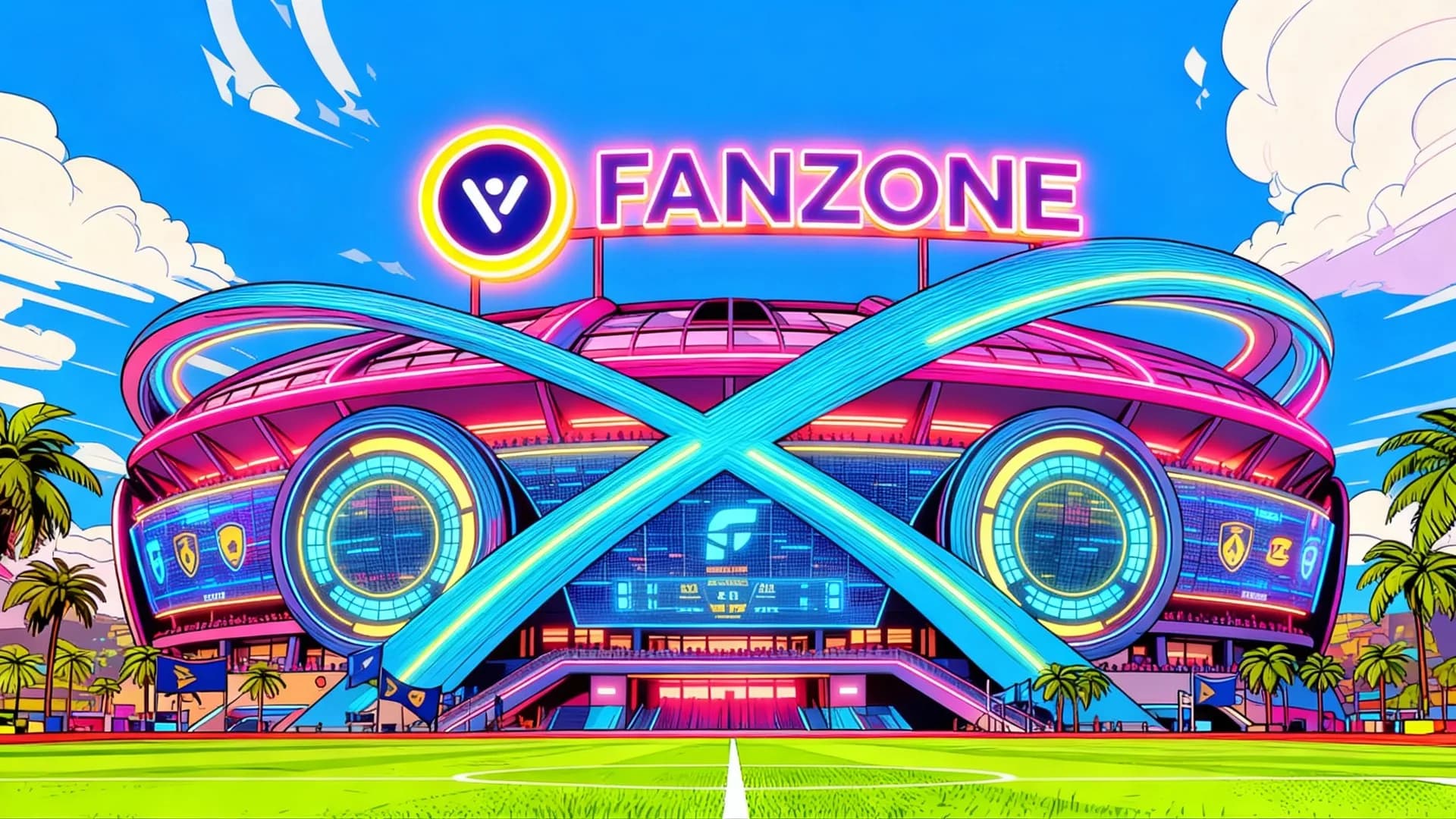
One of the visuals created on Scenario, used in the Fastory trailer video
The Challenge: Go Bigger On Fan Experience, Without a Bigger Team
Fastory’s clients expect experiences that feel premium and made for them: arena takeovers, giant‑screen videos, stylized trailers, and in‑game universes that match their brand IP.
Before Scenario, pushing this ambition at scale came with trade‑offs:
Fragmented tools and workflows
Early experiments with AI (for example Midjourney for static assets and backgrounds) meant jumping between platforms, managing multiple accounts, and losing time just tracking versions and tests.
Costly, time‑intensive production
High‑impact sequences for events, trailers, and fan activations required heavy motion design work, especially when mixing 3D, stylized looks, and client‑specific details.
Limited bandwidth for experimentation
With a small team and many clients, every new idea had to compete with day‑to‑day delivery. It was hard to justify weeks of R&D to explore bold new visuals when production schedules were already tight.
Fastory needed a way to centralize video, image, and 3D experimentation in one place. Keep creative control and brand/IP fidelity while moving faster and let a single motion designer go 100× further in both speed and ambition.
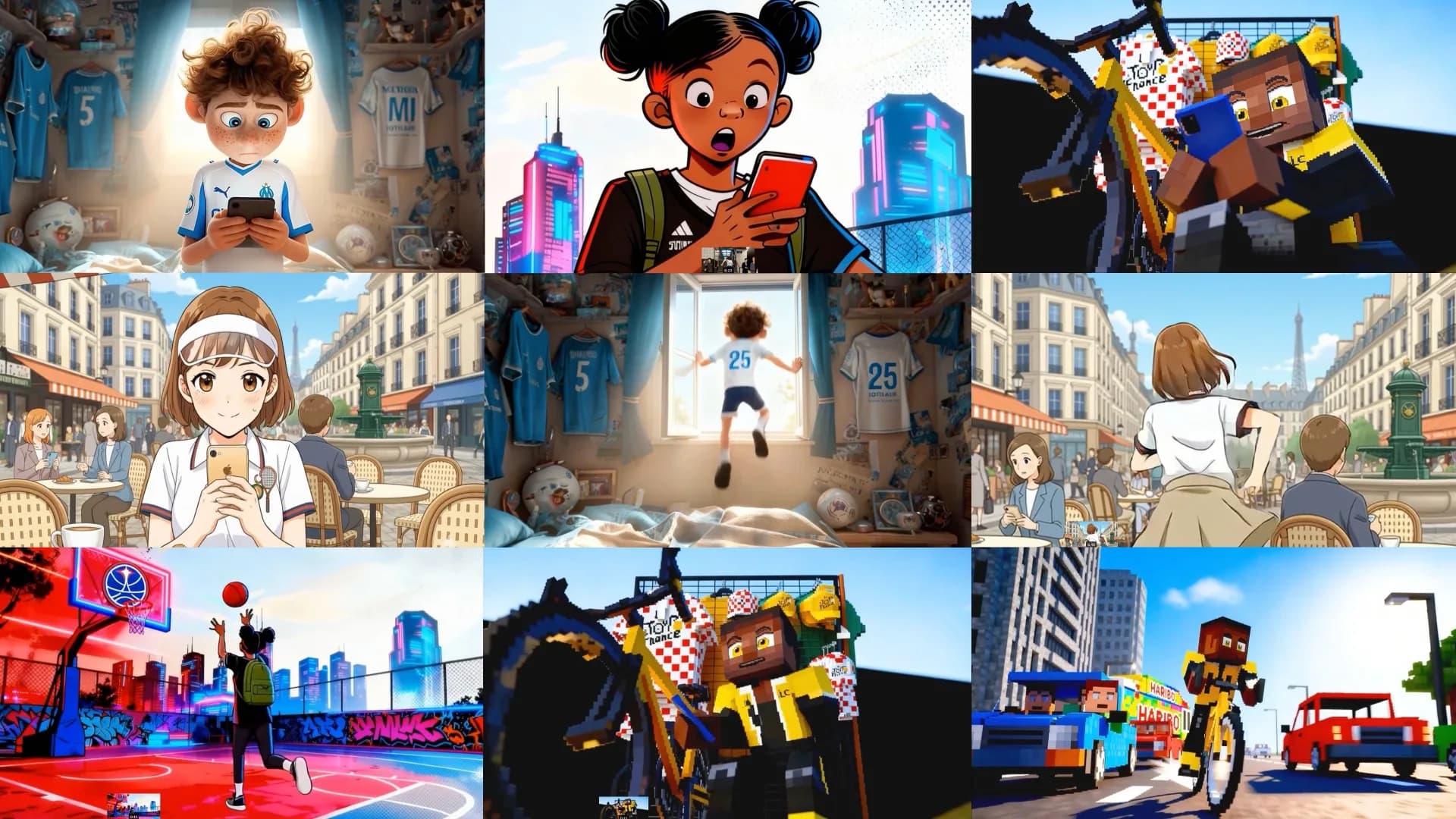
Fastory trailer storyboard of visuals created on Scenario
The Solution: One Creative Hub For Video, 3D, and Style Exploration
Scenario became Fastory’s central creative hub. Instead of scattering work across different AI tools, the team now runs most of their video and visual workflows in one place.
With Scenario, they can:
Start from real gameplay or 3D scenes, then layer styles and materials on top, rather than generating everything from scratch.
Apply different visual universes (Pixar‑like, manga, Spider‑Verse‑inspired, Minecraft‑style, and more) to the same core animation while preserving motion created in tools like Blender and After Effects.
Iterate quickly across models like Runway Aleph, Kling, VEO3, Qwen, Seedream, and image/video upscaling tools without losing history or context.
For Marco, Scenario is what turns a single motion designer into a one person creative studio: a place where he can direct, design, experiment, and finalize production‑ready assets without leaving the platform.
The Journey: Fastory’s Workflow with Scenario
Fastory’s workflow blends motion design craft with Scenario’s multi‑model capabilities. Across projects, a clear pattern has emerged.
The team starts by capturing real gameplay or building simple 3D sequences, such as the 3D Baller game in Blender. From there, they work to define the concept, storyboard, and emotional arc of each piece.
Scenario then becomes the experimentation and enrichment layer for each flagship project, with a central but slightly different role depending on the brief.
For the Baller 3D video, Fastory first creates a clean 2D video from a 3D scene while preserving precise camera moves and timing.
Using Runway Aleph in Scenario, they apply different materials and graphic styles to the same motion to show how the game can be customized. This keeps movement identical while the visual treatment changes, which would be far more time‑consuming in a traditional pipeline.
On Scenario, that 3D starting point can also come from a single image, with Hitem3D 3.0 generating meshes or PBR-textured models to build a scene around.
For the Unibet x ARES Fighting Championship 25 Arena video, the team starts from a screenshot of the real arena, Le Zénith, and enriches it with Ares and Unibet branding.
They generate stylized drone‑like flythroughs by defining start and end frames, then rely on Kling in Scenario to create smooth transitions between them. Short, high‑impact fighter sequences come from AI‑generated static images that are turned into fast transitions, which are ideal for a giant screen and QR‑based activation.
The same start-and-end-frame method works with Seedance 2.5, our multimodal video model or P-Video-2-Pro, which takes a first and last frame and generates the motion between them.
For the Fastory trailer, often referred to internally as the “masterpiece” project, the team builds a story centered on four characters from four different client worlds: OM Marseille, Roland‑Garros, Paris Basketball, and the Tour de France.
All four characters converge toward a shared fanzone. Each world is given its own visual universe, such as Pixar‑like, manga, Spider‑Verse‑inspired, or Minecraft‑style aesthetics.
Within Scenario, the team generates and refines keyframes for each universe. They repeatedly rework images to add client‑specific easter eggs and precise details, including jerseys, signage, and objects. Style coherence across shots is maintained by reusing reference frames and prompts. Multiple models, such as Seedance 2.5, Minimax H3, Kling, VEO3, Qwen, Seedream, and Flux, are combined inside Scenario. For each shot, the team selects whichever model best matches the desired style and level of control.
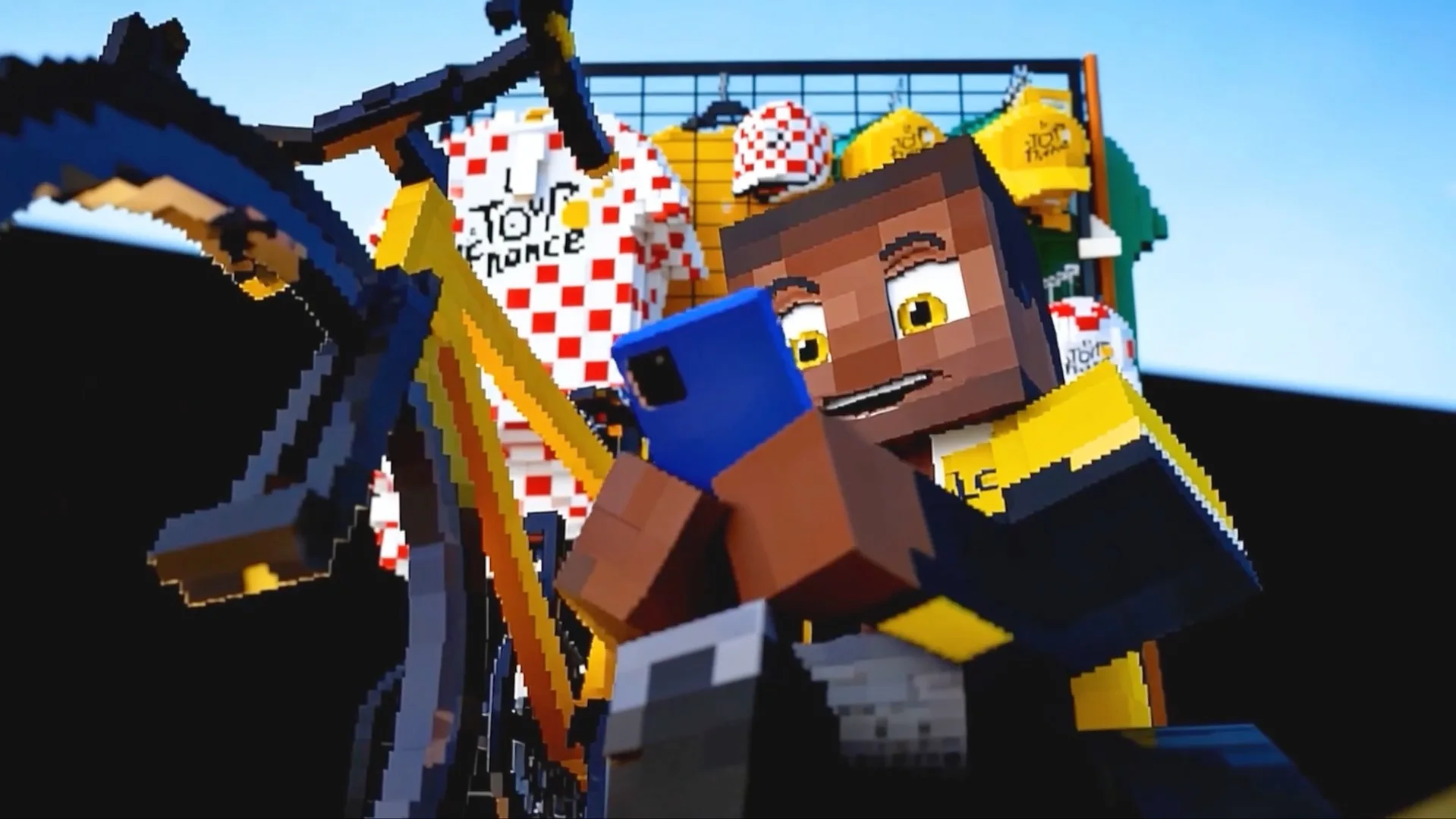
A minecraft inspired scene created using Scenario, used for the Fastory trailer
Instead of constantly starting over, Fastory iterates with precision. Scenario keeps a full gallery of tests and attempts. This allows the team to compare, reuse, and branch from previous generations.
They can reload the same frame and adjust only part of the prompt or style parameters, which helps maintain a consistent visual language across an entire piece, even when different models are involved.
The Results: From Experiments to Production‑Ready “Wow” Moments
Marco estimates that Scenario makes him “100 times faster” on complex projects, thanks to centralized tools, preserved history, and the ability to iterate on very specific frames and details instead of rebuilding from scratch.
This acceleration means a small team can now produce videos and trailers that rival large agencies, combining high‑end visuals, multiple styles, and rich client IP in a single piece.
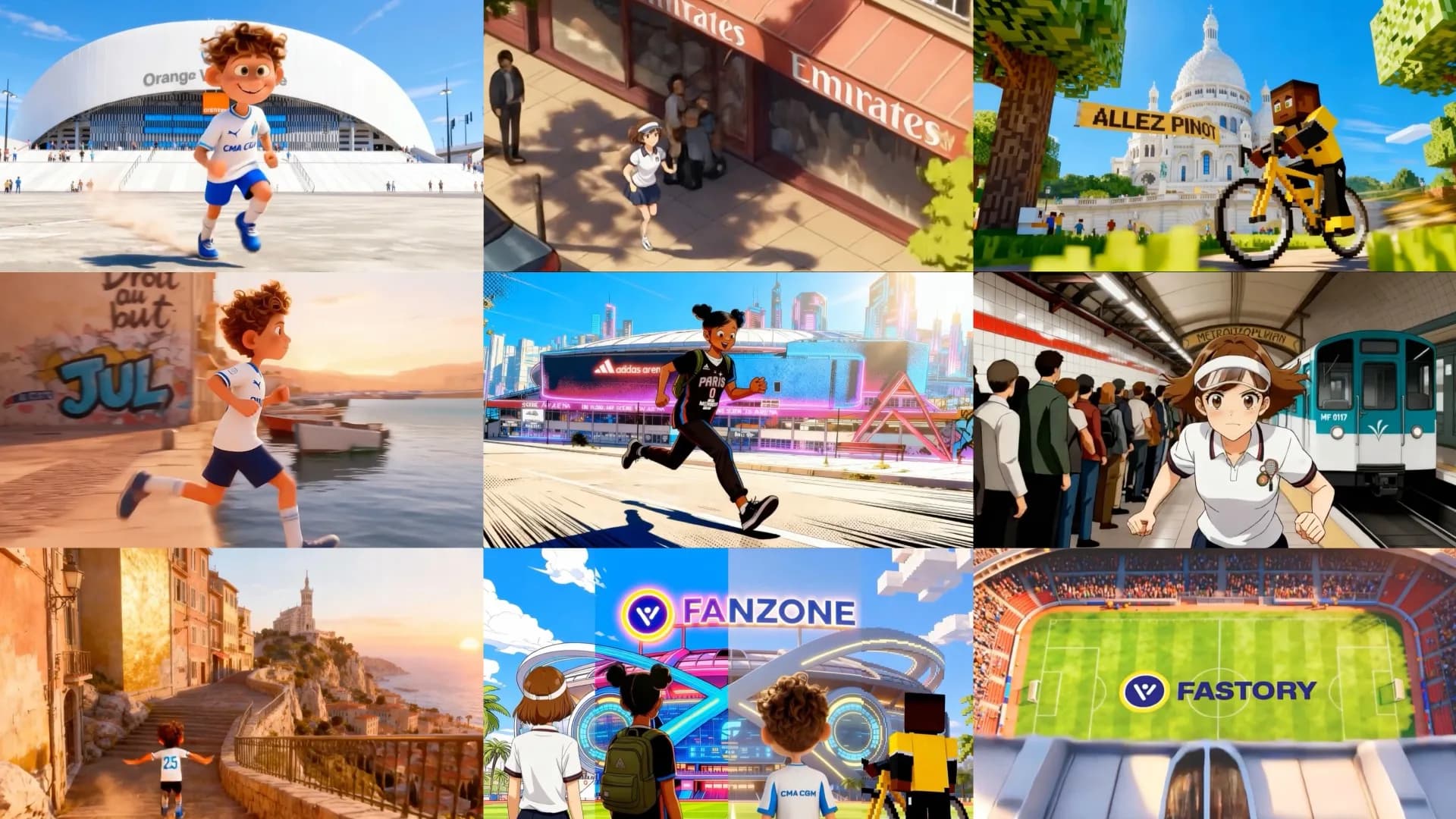
Fastory trailer storyboard with Scenario generated visuals
For Fastory’s clients and partners, the perceived value has also increased. Famous clubs and leagues react with genuine “wow” moments and recognize the sophistication of what is being produced.
Scenario enables Fastory to take more creative risks while still retaining the flexibility to adjust logos, IP usage, or visual details later if needed. At the same time, key flagship pieces like the Baller 3D video, the Unibet arena film, and the master trailer now serve as reusable blueprints for future campaigns, clearly illustrating how AI‑powered workflows can elevate fan experiences again and again.
Impact at a Glance
- Up to 100× faster perceived productivity for complex motion design projects, according to Marco’s own estimate.
- A single motion designer now operates like a full creative studio, handling 3D, motion, and AI‑powered experimentation inside Scenario.
- Multiple AI models (Runway Aleph, Kling, VEO3, Qwen, Seedream, Flux and others) are centralized in one workflow, making it easy to test, compare, and refine styles without losing history.
- A 15‑person multi-skilled team delivers cinematic trailers and arena videos that rival large creative agencies, without increasing headcount.
- Flagship pieces such as the Baller 3D video, the Unibet x Ares 25 arena film, and the multi‑universe Fastory trailer now act as inspiring blueprints for future fan activations.
- Clients, including major clubs and leagues, respond with a clear “wow” factor, recognizing the sophistication and ambition of Fastory’s content.
The Team Behind the Work
Fastory’s results come from a tight collaboration between creative leadership and production:
- Marco Civolani, Motion Designer
- Jacinthe Busson, Co-founder & CPO
- Sylvain Weber, Co‑founder & CEO
Conclusion
Fastory’s collaboration with Scenario shows how a small, distributed team can operate at the level of much larger studios when creative vision and the right platform align.
Their advantage does not come from stacking more tools or dramatically increasing headcount. Instead, it comes from a clear focus on fan experience, a unified creative hub that centralizes models, experiments, and workflows, and a motion designer who is empowered to explore, refine, and ship ambitious ideas without friction.
By building this kind of workflow inside Scenario, Fastory has turned limited production bandwidth into a studio‑scale creative engine. They produce better visuals, move through creative cycles faster, and deliver fan experiences that feel fresh, cinematic, and deeply tied to each client’s world.
And this is only a starting point: as AI models continue to evolve, Fastory already sees a clear path toward V2 and V3 versions of their flagship trailer and future campaigns, all built on the same Scenario‑powered foundation.
Bring this kind of workflow to your own team with Scenario.
 ×
×