Block
A capsule, a box, a few primitives.Made in minutes. It marks where something is, its size and how it moves, and leaves the rest to the model.
A Scenario exploration
Build the shapes. Block the motion.
Lay out the shot in Blender, and a video model paints the final picture over it. Six tests show which stand-in each thing needs.
ForGame, marketing and animation teams who lay out a shot in Blender and let a video model paint the final picture over the playblast.
What was madeSix A/B tests where only the stand-in changes, plus The Last Lantern and a coral reef film: six examples, a narrated explainer, a guide, an illustrated making-of and an agent skill.
What Scenario didConcepts and finished stills with GPT Image 2.5 Sunburst, 3D placeholders with Tripo P2, rigs with Tripo Rigging, every take with Seedance 2.5, narration and score with ElevenLabs.
01How it works
Teams lay out the shot in Blender and let a video model paint over it. This page is about step 1: what you put in the blockout.
Stand-ins in Blender set where everything is, how big it is and how it moves. Its video is the playblast.
A picture of the first frame, made from the blockout, sets the look: materials, light, costumes.
A video model, here Seedance 2.5, takes the layout and the motion from the playblast (step 1) and the look from the still (step 2).
02Step 1: the stand-ins
Two kinds, often mixed in one shot.
A capsule, a box, a few primitives.Made in minutes. It marks where something is, its size and how it moves, and leaves the rest to the model.
A 3D model, posed or rigged.Takes longer: a concept image, a 3D generation, sometimes a rig. It shows the real shape.
Both in one shot.The set and some props built, the characters and other elements blocked.
03The rule
A copied shape is what you want. A copied motion is only as good as its keys: a walk sped up stays a walk. Give a character no legs and the model invents the gait from what it has seen.
Shapes
Products, props the art direction names, set pieces seen close. A block only gives the model a size to fill.
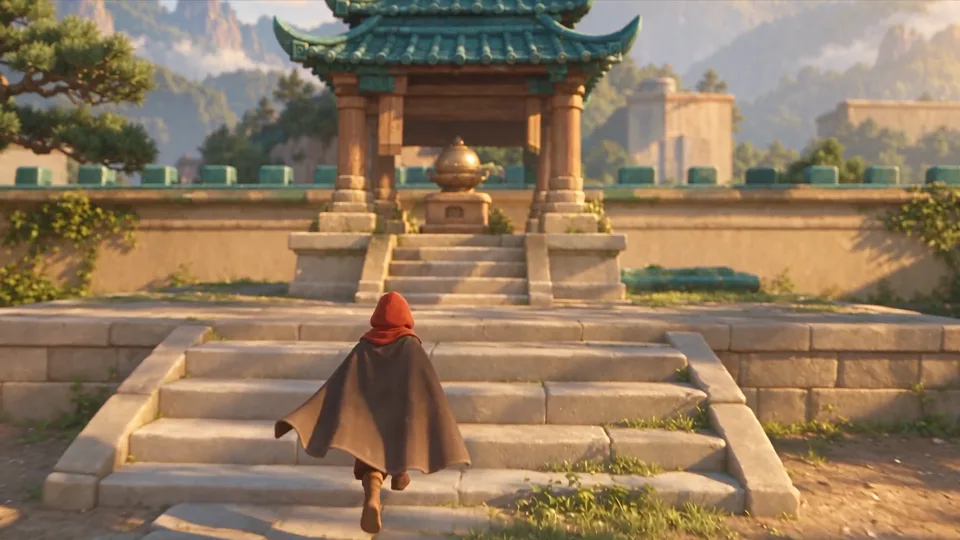
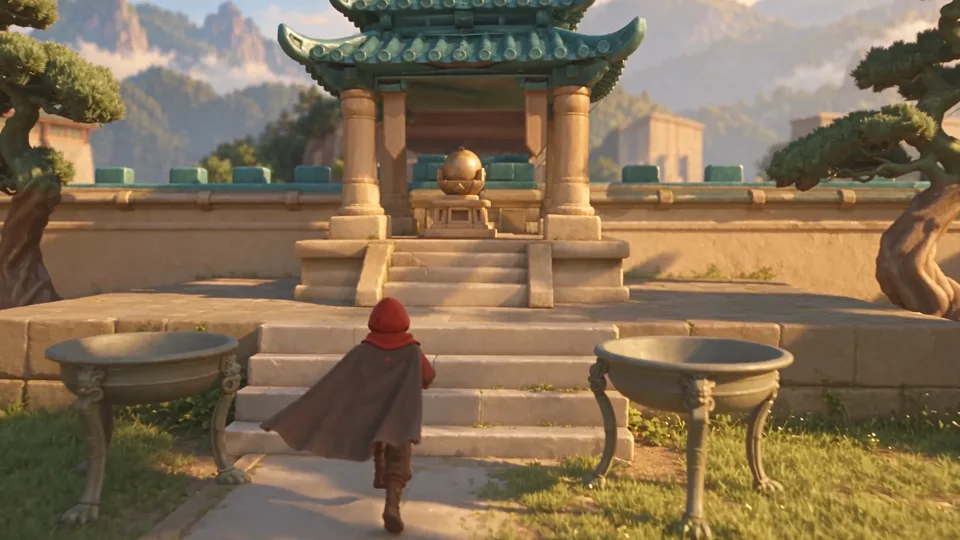
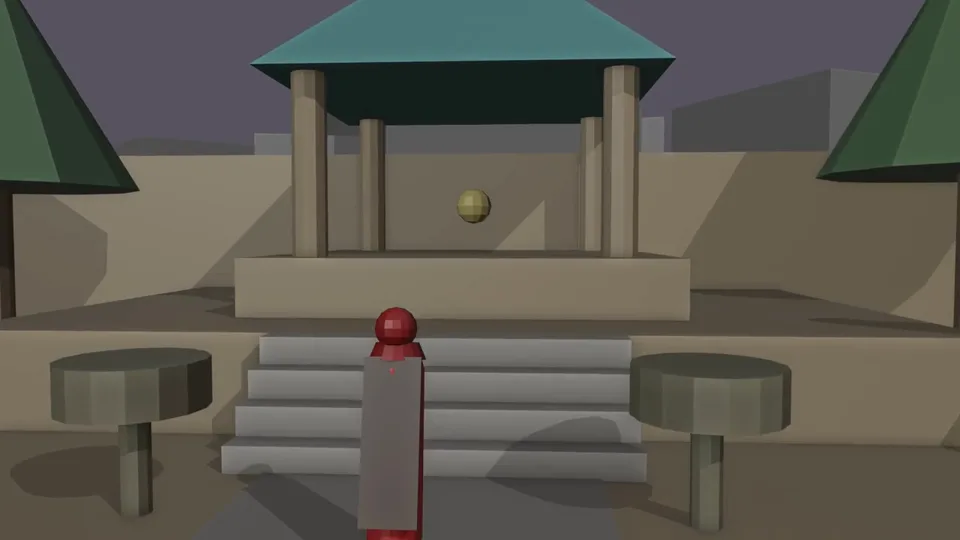
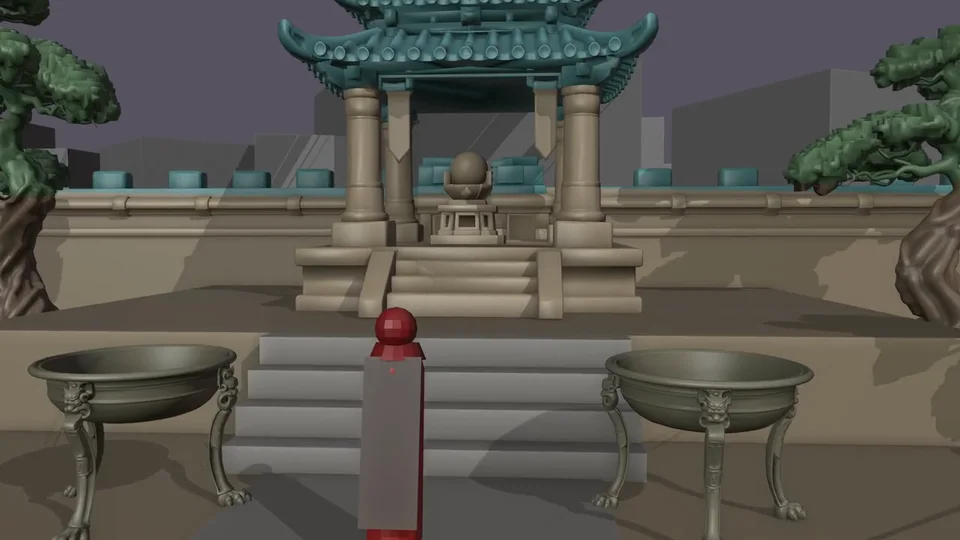
The temple at 7.5 s. Far set pieces and filler can stay blocks: the still gives them their look. See the temple
Motion
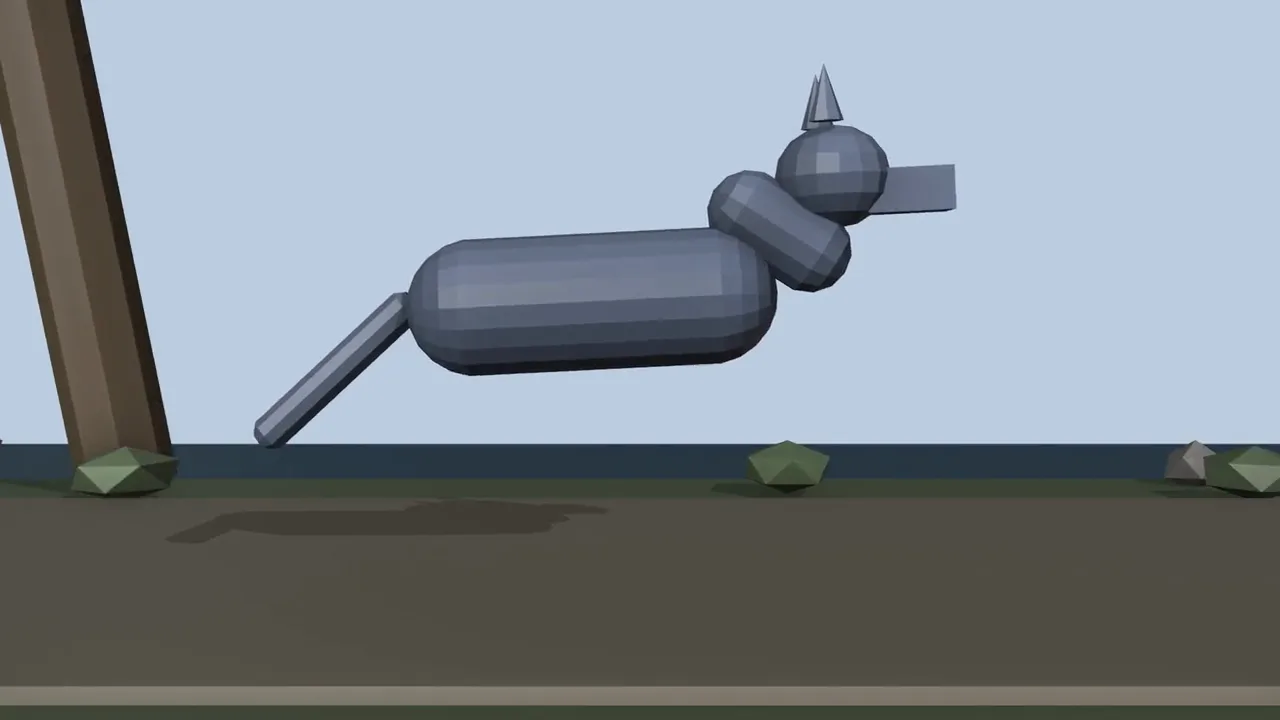
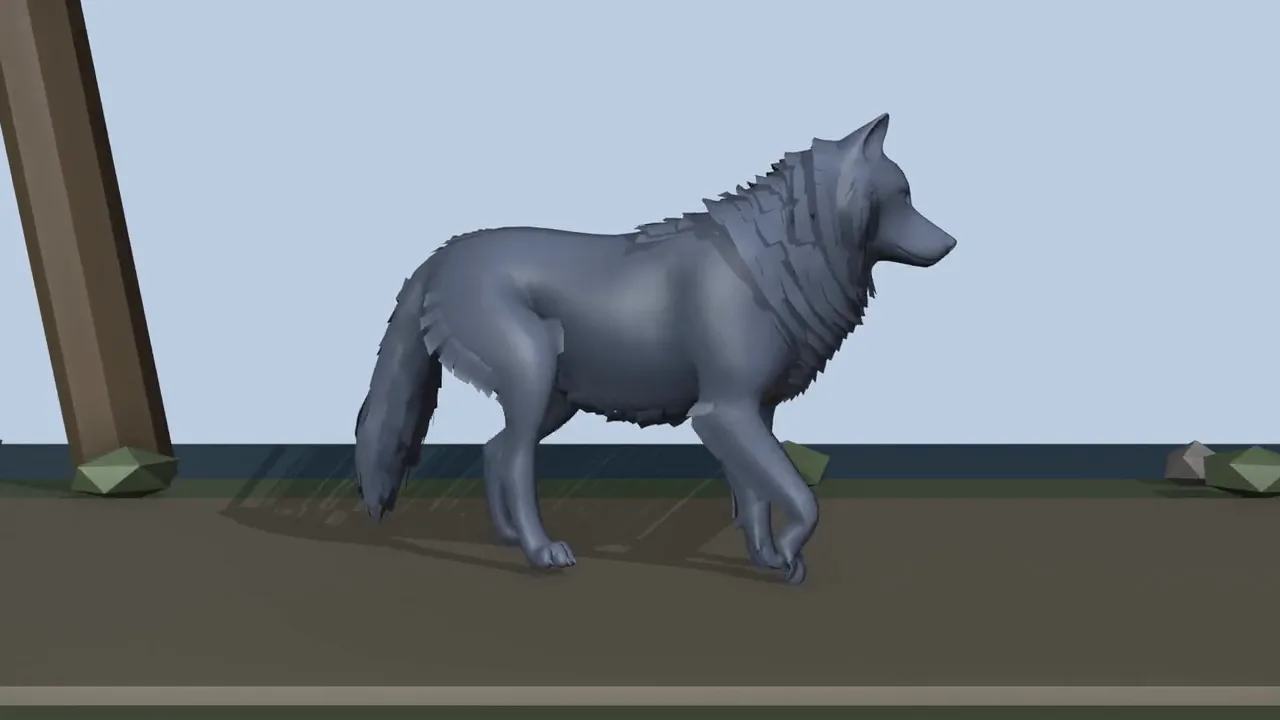
People and animals. The model copies a rig's motion as it is. A legless capsule leaves the gait to the model, which has seen wolves gallop.
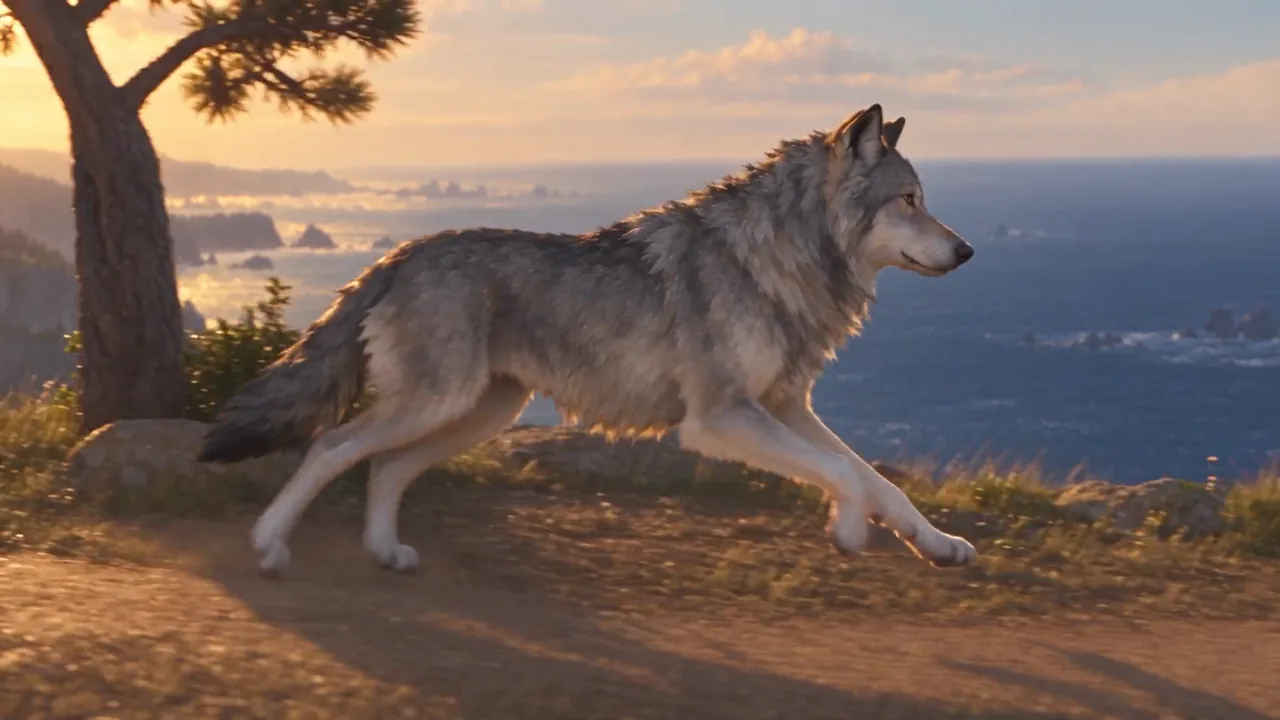
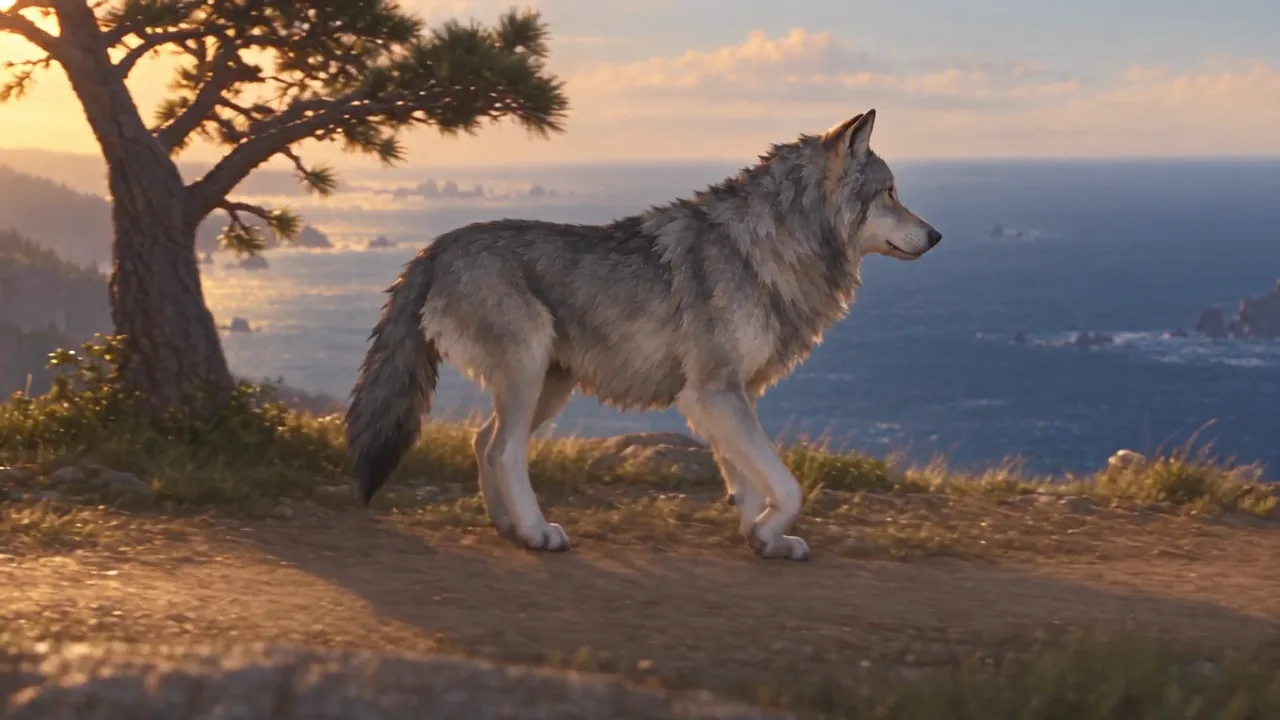
The wolf at 2.0 s. One exception: a clean cycle of exactly the motion you want is copied well. See the run
Hybrid
Most shots have both: build the set and some props, block the characters and other elements.
04Step 1, done well
The video model sees only the playblast and the still, and both come from the blockout.
05The evidence
Each is a fair test: same camera, same finished still, same prompt. Only the stand-in changes, with the one sentence of the prompt that describes it.
Group 1 of 4
Props and products. The finished still usually shows them already. Build when every side must match.
Example 1ObjectsMarketing, product film
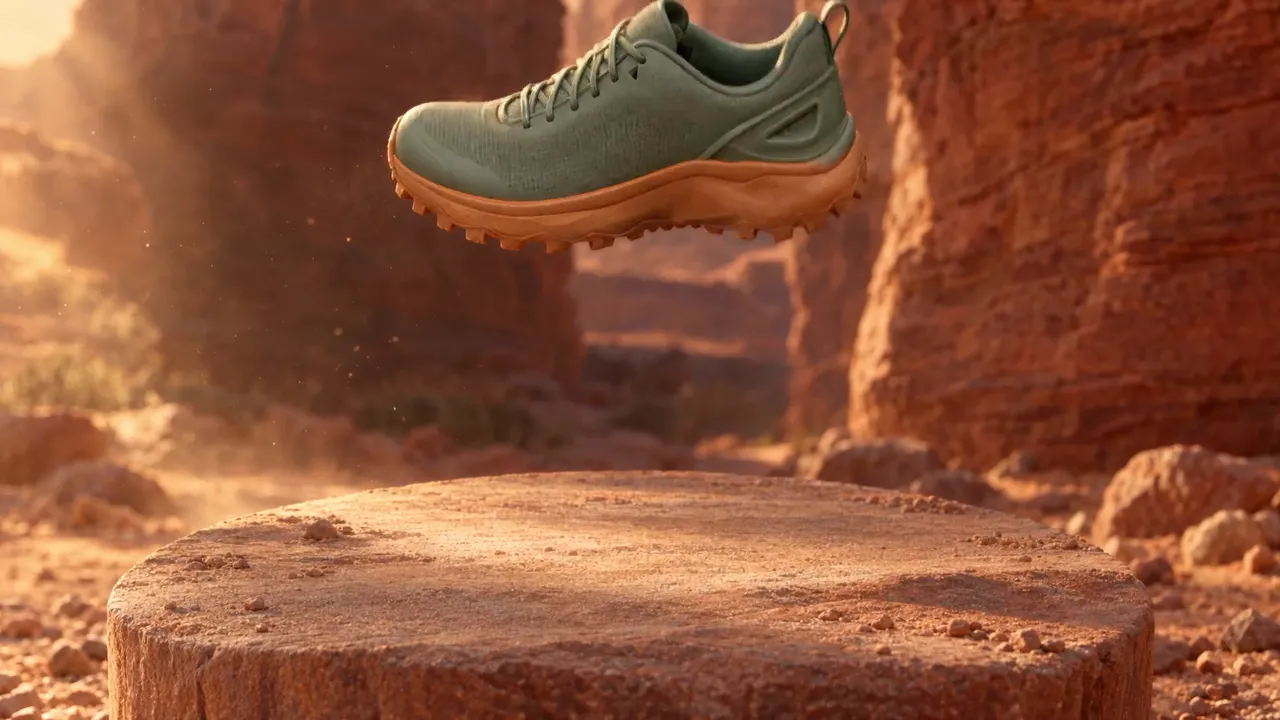
A sneaker drops onto a plinth and the camera circles it. The shoe must look like the product from every side.
TakeawayBoth gave the shoe, because the still shows it. Build it when the back and the sole must match the real product.
BlockThree boxes and a wedge, two colors
The shoe from the still, from every angle, heel included.
BuildA generated 3D shoe, same two colors
The same shoe, the same heel. No visible gain over the block.
In @video1 the sneaker is a rough block stand-in, a few boxes and a wedge in the product's two colors: it only marks where the shoe is, its size, its angle and how it moves.
In @video1 the sneaker is a rough 3D placeholder model painted in the product's two flat colors: it only marks where the shoe is, its size, its angle and how it moves.
Group 2 of 4
People and animals. Their look comes from the still; the stand-in decides their motion. Block them by default: a rig's motion is copied as it is.
Example 2CharactersGames, companion
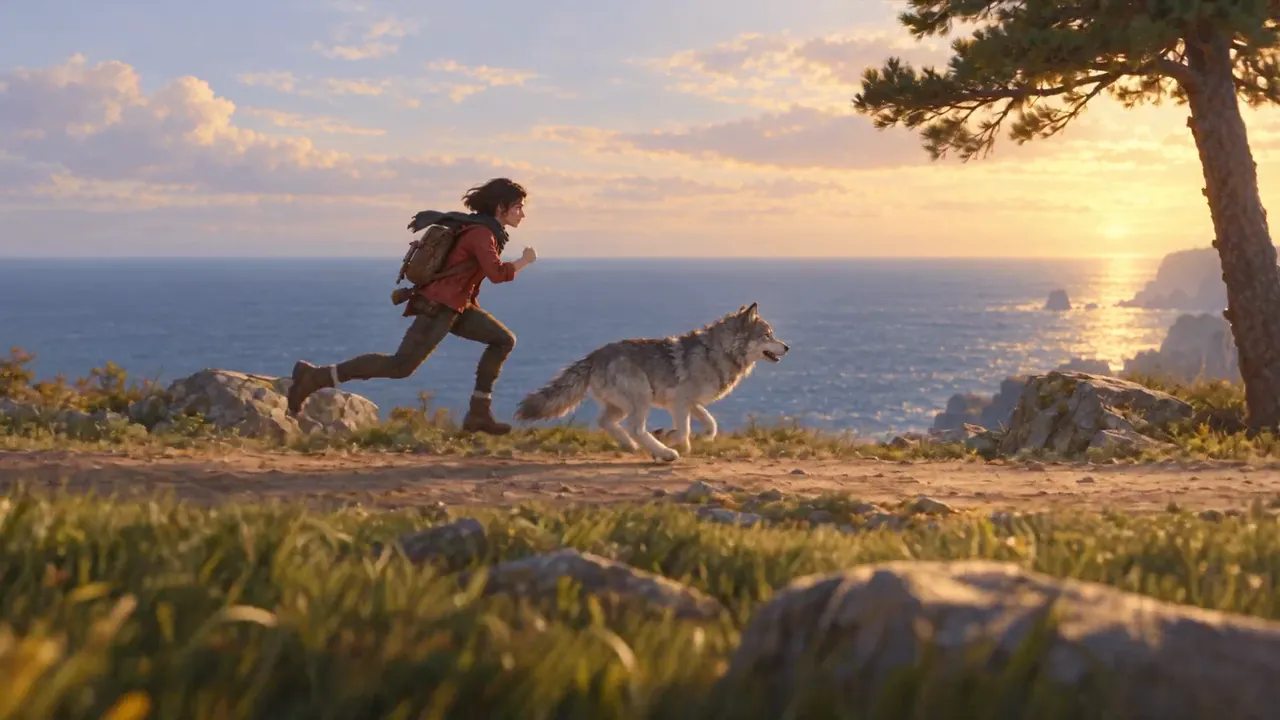
An explorer sprints along a cliff path with her wolf, and they leap a log. The wolf has to gallop. Only the wolf changes: the explorer is the same red capsule in both versions.
TakeawayBlock them. The legless wolf galloped; the rigged wolf, its walk sped up, came back as a trot. Rig a character only for a clean cycle of exactly the motion you want, like the run below.
BlockA legless capsule wolf: head, ears, tail
A full gallop and a clean leap, in both shots.
BuildA rigged wolf, its walk sped up
A trot. In the second shot it comes back upright: the walk cycle shows through.
In @video1 the wolf is a blue-gray stand-in, a horizontal capsule body with a ball head, a snout, ears and a tail and no legs: it only marks where the wolf is, its size, its pace, its heading and its leap.
In @video1 the wolf is a rough blue-gray 3D model of the wolf: it only marks where the wolf is, its size, its pace, its heading and its leap.
The same cliff path with the camera at leg height for 5 seconds, the wolf and the explorer filmed one at a time. Two drafts per version, one shown.
A rigged walk played faster stays a walk.
BlockA legless capsule: head, ears, tail
A loping run: long reaching strides, dust from the paws.
BuildA rigged wolf, its walk sped up
A fast walk, tail low, although the prompt asks for a gallop.
A clean run cycle is copied as it is, and here it looked more athletic.
BlockA capsule at her height, no legs
She runs, clean legs, arms swinging bent: the model's own gait, more upright.
BuildA rigged girl playing a run cycle
She runs, clean legs: the rig's cycle, copied as it is.
In @video1 the wolf is a plain blue-gray stand-in shape with no legs: it only marks where the wolf is, its size and its direction; replace it with the real wolf from @image1.
In @video1 the wolf is a plain blue-gray 3D model of the same wolf; replace it with the real wolf from @image1.
It runs in a loose, natural gallop: front legs reaching far forward, hind legs gathering under the body, the back flexing with every stride, paws striking the dirt and never sliding.
In @video1 the girl is a plain red stand-in shape with no legs: it only marks where she is, her height and her direction; replace it with the real girl from @image1.
In @video1 the girl is a plain red 3D model of the same girl; replace it with the real girl from @image1.
She runs naturally at a steady pace: knees driving forward, feet striking the dirt under her hips and pushing off, never sliding, arms swinging bent at the elbow.
Example 3CharactersAnimation, acting beat
A girl brings her grandfather a toy boat; he kneels to take it. One hand-off, a locked camera.
TakeawayBlock it. The capsules gave the same kneel and hand-off as the posed mannequins.
BlockTwo capsules with arms
One hand-off, he stays on one knee. The camera drifts closer at the end.
BuildTwo mannequins, posed on keys
One hand-off, he stays on one knee. The framing of the blockout holds to the end.
In @video1 the girl and her grandfather are colored capsule stand-ins with ball heads and simple arms: red is the girl, blue is the grandfather. They only mark where each one is, their height, their timing and roughly where their arms go. The blue capsule is short because he kneels on one knee the whole time.
In @video1 the girl and her grandfather are gray jointed mannequins: the one with the red torso is the girl, the one with the blue torso is the grandfather, kneeling on one knee. They mark where each one is, their height, their timing and their poses.
Group 3 of 4
Sets and environments, big, mostly still and full of pieces. Build the layout the camera follows.
Example 4ScenesAnimation, nature film
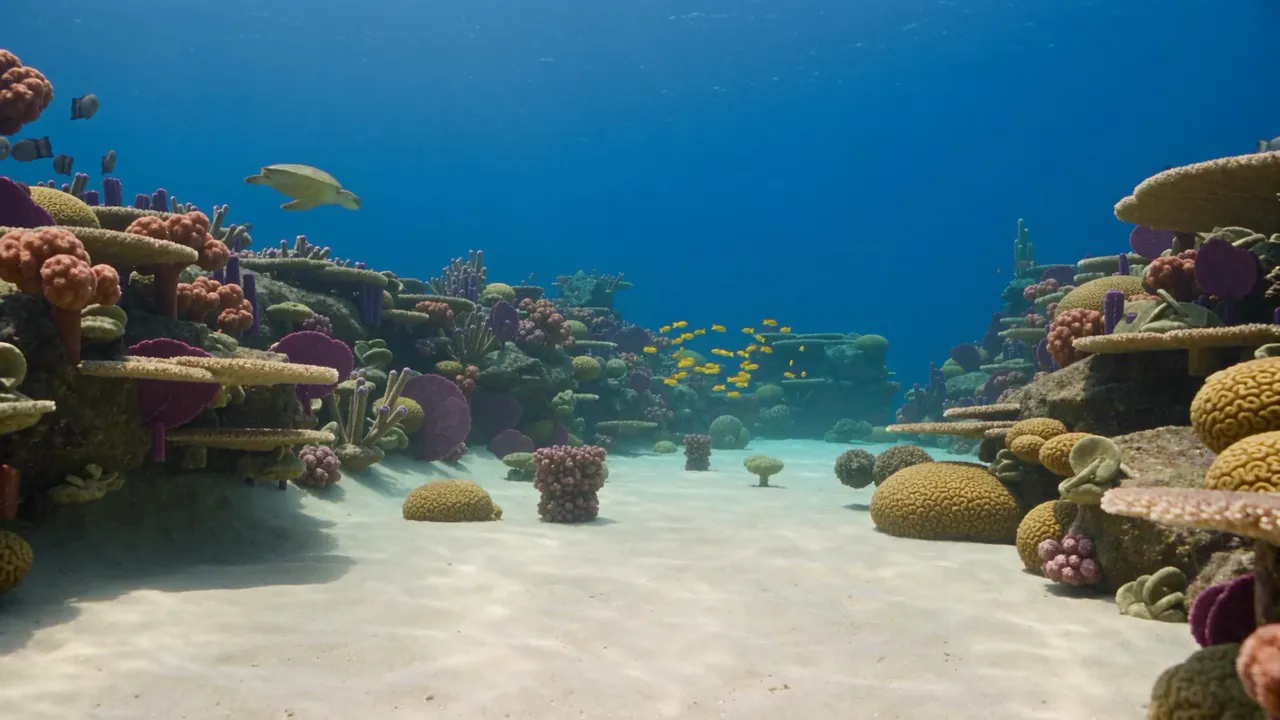
A turtle swims down a reef channel; a manta crosses at the end. 12 s, in two looks from one blockout.
TakeawayBuild the set when its layout is the shot. One blockout, any look.
No A/B here: the whole scene was built. It shows what building a set gives, and what it costs.
BuildA reef placed piece by piece, a shaped turtle
Between the two looks only the three reference images and one sentence change. Both keep four flippers.
From the coral reef blockout, October 2026, finished for this page. GPT Image 2.5 Sunburst reference images, Seedance 2.5 takes finished with Seedance 2.5 Draft Complete. One take per look.
Group 4 of 4
Most shots: build the set and the props the art direction names, block the characters and other elements.
Example 5HybridGames, level reveal
The camera rises over a temple gate, then follows the hero to the shrine. The art direction names bronze braziers.
TakeawayGo hybrid: model the set and every prop the art direction names, keep the hero a capsule.
BlockThe set in boxes, the hero a capsule
Right layout and light. The braziers vanished.
HybridSet and props modelled, the hero a capsule
Every piece as designed, bronze braziers included.
The braziers at 7.5 s
In @video1 the temple is built from rough blocks that only mark where each piece is, how big it is and its color: the box arch with a teal slab on top is the carved stone gate, the long boxes are sandstone walls, the cones on brown posts are wind-sculpted pines, the box-and-ball pedestals are stone guardian lions, the teal pyramid roof on four columns is the shrine, the plain cylinders are broken stone pillars, the wide disks on posts are bronze braziers.
In @video1 the temple is built from rough 3D placeholder models of the gate, the walls, the pines, the guardian lions, the shrine, the broken pillars and the braziers, painted in flat colors: they mark where each piece is, how big it is and its shape.
Example 6HybridAnimation, short film
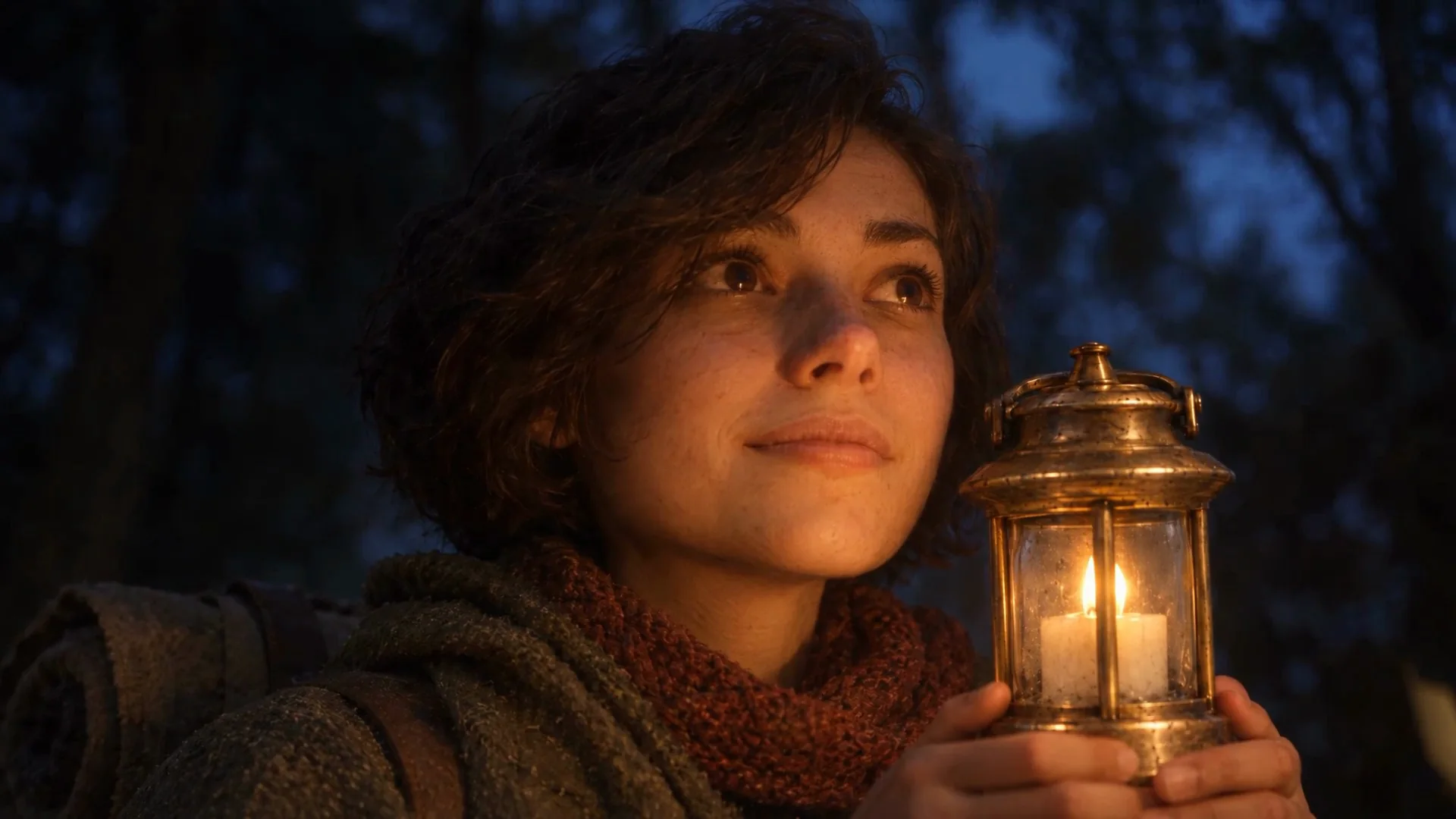
A 2-minute short in 40 cuts: a traveller carries a lantern through a forest.
TakeawayBuild the world the camera explores. Block whoever walks through it.
Hybrid43 modelled set pieces, the traveller a red capsule
12 s of moments from the film, each over the blockout it was made from.
Seen from the side at ground level, on the hill path up to the stone circle. The red capsule, with no arms and no legs, carries the modelled lantern at hand height.
HybridThe modelled lantern, the traveller a capsule
Seedance 2.5 gave her legs, boots and a steady climb; the lantern kept its design, in her hand.
One shot, three stand-ins for the traveller
From The Last Lantern, October 2026. GPT Image 2.5 Sunburst concepts and stills, Tripo 3.1 models, Seedance 2.5 takes. See the full exploration.
06Summary
| Block | Build | Hybrid | |
|---|---|---|---|
| Use it for | Characters and creatures, filler, far set | Products, named props, set pieces seen close | Most shots |
| Why | Natural motion, made in minutes | The model copies the exact shape | An exact world, natural motion |
| Watch out | The model invents the details | Motion is copied as keyed: only as good as the cycle | Two kinds of stand-in to make |
| Seen in | Run and wolf, gesture | Sneaker, reef, run (with a run cycle) | Temple, The Last Lantern |
07Your shot
Answer for each thing in your shot. The answer names the stand-in, how to set it up and the example it comes from.
08Make yours
The skill gives your agent the stand-in rules, the prompt sentences and the A/B check. It runs through Scenario MCP.
Made with Scenario. Stills: GPT Image 2.5 Sunburst. 3D models: Tripo P2 (Tripo 3.1 in The Last Lantern). Rigs and motion: Tripo Rigging 2.5 (wolf), Tripo Rigging 1.0 (run). Video: Seedance 2.5, finished with Seedance 2.5 Draft Complete. Blockouts: Blender 5.2.
Narration and score made with Scenario: ElevenLabs v4 TTS (voice Brian), ElevenLabs Music v2.5. Takes: Seedance 2.5; stills: GPT Image 2.5 Sunburst; 3D: Tripo P2, Tripo Rigging 2.5, Tripo Rigging 1.0.