
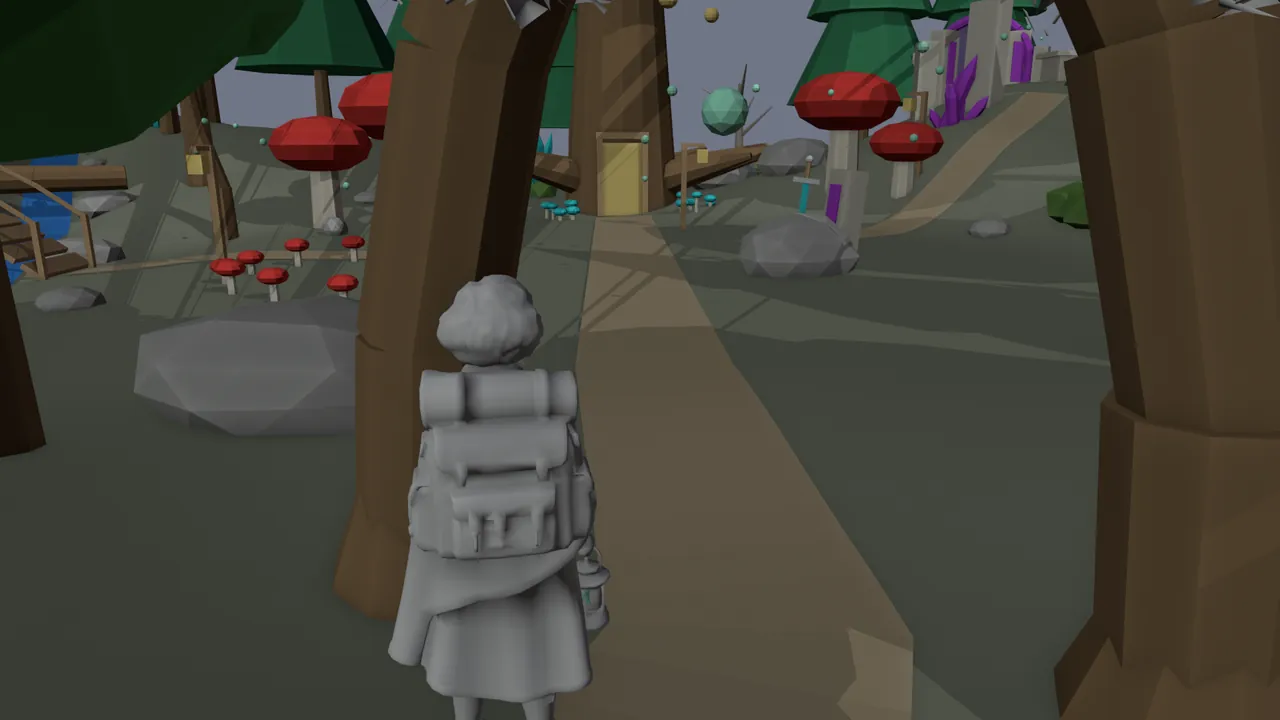
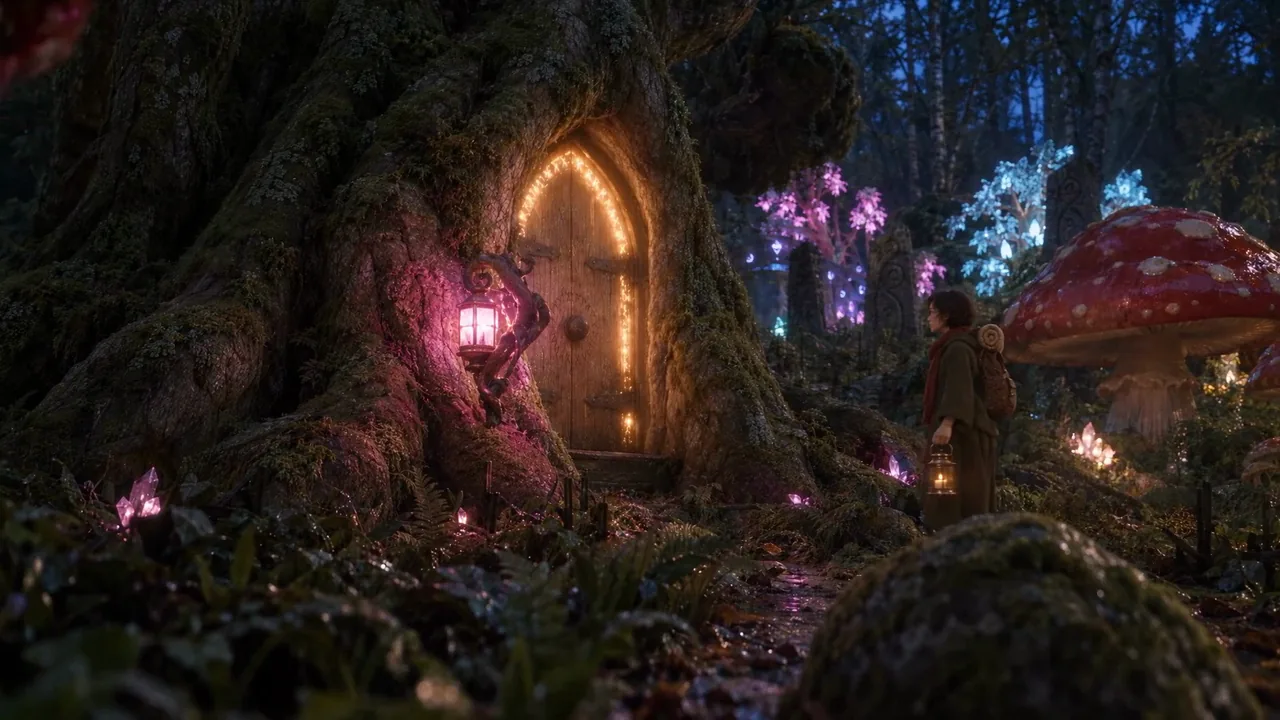
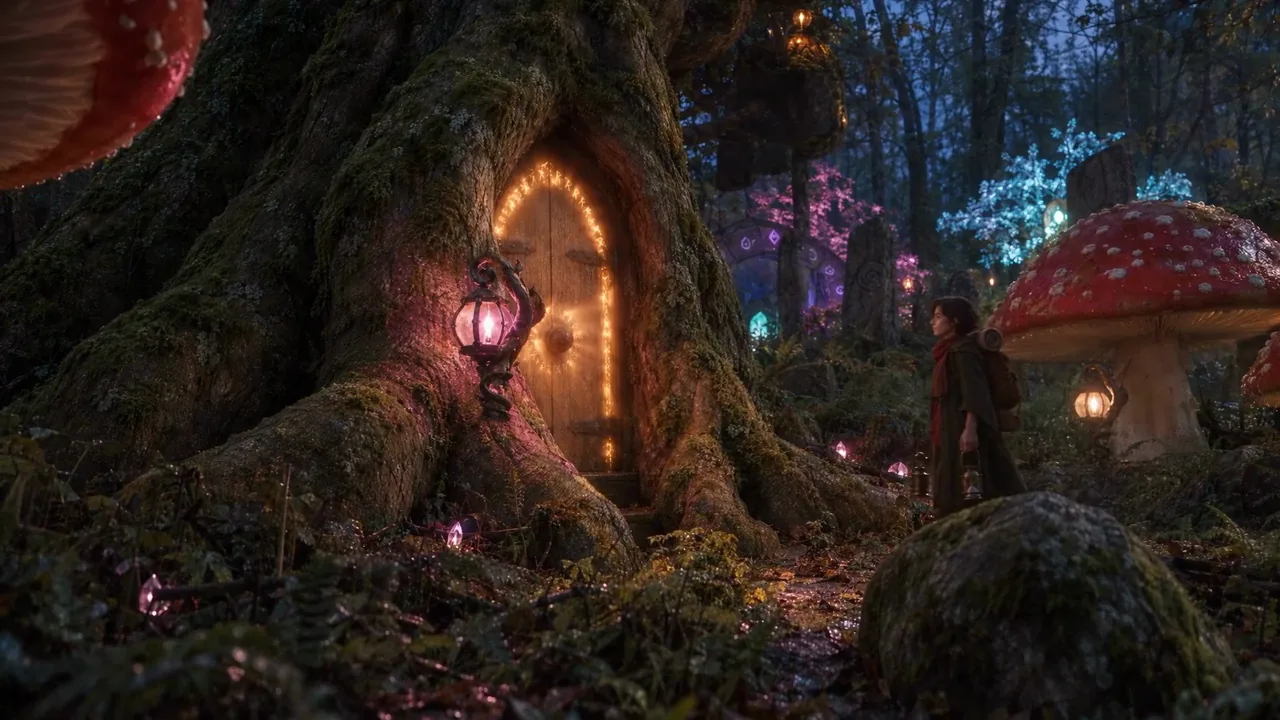
Cut 35, frame 2515 Two lanterns
Note She carries one lantern, in her right hand. Fix A lamp post beside her read as a second lantern: posts are hidden in that playblast, and the cut gets a new take.
A Scenario explorationThe Last Lantern
Two minutes, 40 cuts, and every camera, cut and character under control.
In The Last Lantern, a traveller carries the forest's last lantern home. Under every frame sits a grey Blender layout that fixed the camera, the cut and her position before any picture existed.
Move your pointer: the lantern shows the layout under the picture.
Picture Seedance 2.5 over the Blender playblast, cuts 27 to 31
Directors, previs and cinematics teams who need a generated film to keep its camera, cuts, characters and props from the first cut to the last.
A two-minute film in 40 cuts and the Blender layout under it, a how-it-was-made film, an illustrated making-of, a guide and an agent skill that applies the method to your own story.
43 concept images and 3D models for the set, the ground and the sky, reference sheets, one finished still per cut, 39 Seedance takes in the cut, the narration, the score and the effects.
01 / The film
Two minutes at 24 frames per second. Turn on X-ray to lay the Blender playblast over the film, then drag the divider: the camera, her position and every lamp sit in the same place, frame for frame.
02 / Four versions of a frame
Pick a cut. Its key frame was made as a clay playblast, an EEVEE look render, a finished still and the film. Sweep across the layers: the framing never moves, only the surface changes. Each one is made from the one before.
03 / A lens through every step
Pick a cut, then choose what fills the picture and what shows in the lens: the first coloured blocks, the clay playblast, the Blender render, the finished still or the film. Move the lens over the frame. Every step keeps the same camera and framing.
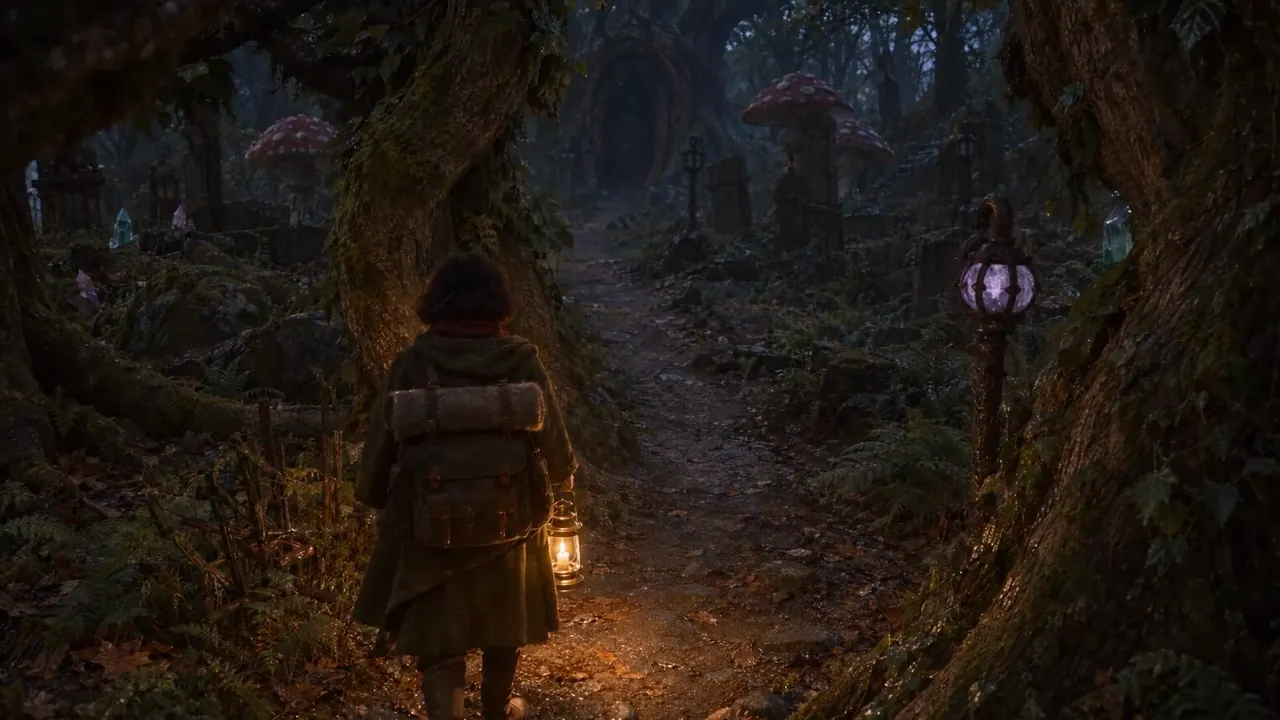 Picture: Film
The blockout layer is the first Blender scene, with the coloured proxies that the generated models later replaced, rendered from the same camera at the same frame. In that layer the traveller is the early grey figure; in the clay she is the red capsule that Seedance turns into her.
04 / The grey-box
The brief came in two messages. Claude Opus 5.5 built the scene in Blender 5.2 through the Scenario Blender Plugin, one short script per stage. The timelapse rebuilds the finished scene in the order of those stages. Drag to see the wireframe.
"Can you create a block out scene for an incredible enchanted forest with lots of various trees, rocks, arches, magical artifacts and elements, some relief (ground is not even) etc. About 50 m by 50 m"
"How can we use this scene in the Scenario MCP? To write a 2 min mini film"
objects in the blockout: about 120 trees and bushes, 59 rocks, five arches and a bridge, 78 magical props, on uneven ground 50 by 50 metres.
floating objects and overlaps in the closing audit, both bridge ends on the banks, the walk camera never closer than 0.45 m to a surface.
shots in the first film plan, with a previs and an animatic. All of it in Blender, before a single credit was spent.
05 / Blocks into models
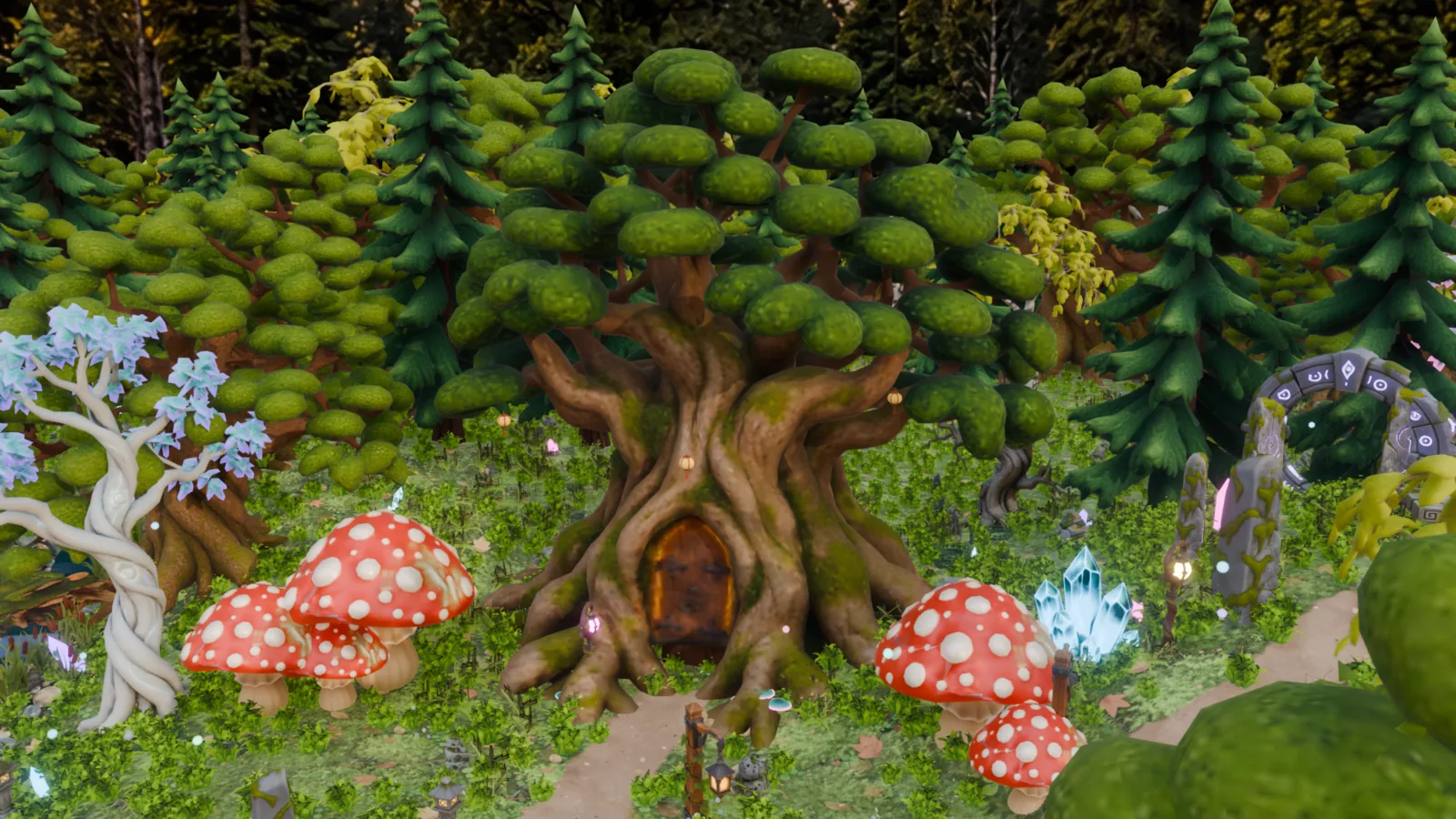
Each kind of block became a concept image with GPT Image 2.5 Sunburst, then a textured model with Tripo 3.1, then took the block's position and scale. The blocks were hidden, never deleted. PATINA Material made the forest floor, the trail and the creek bank, and Scenario Skybox GPT the dusk clearing around the set.
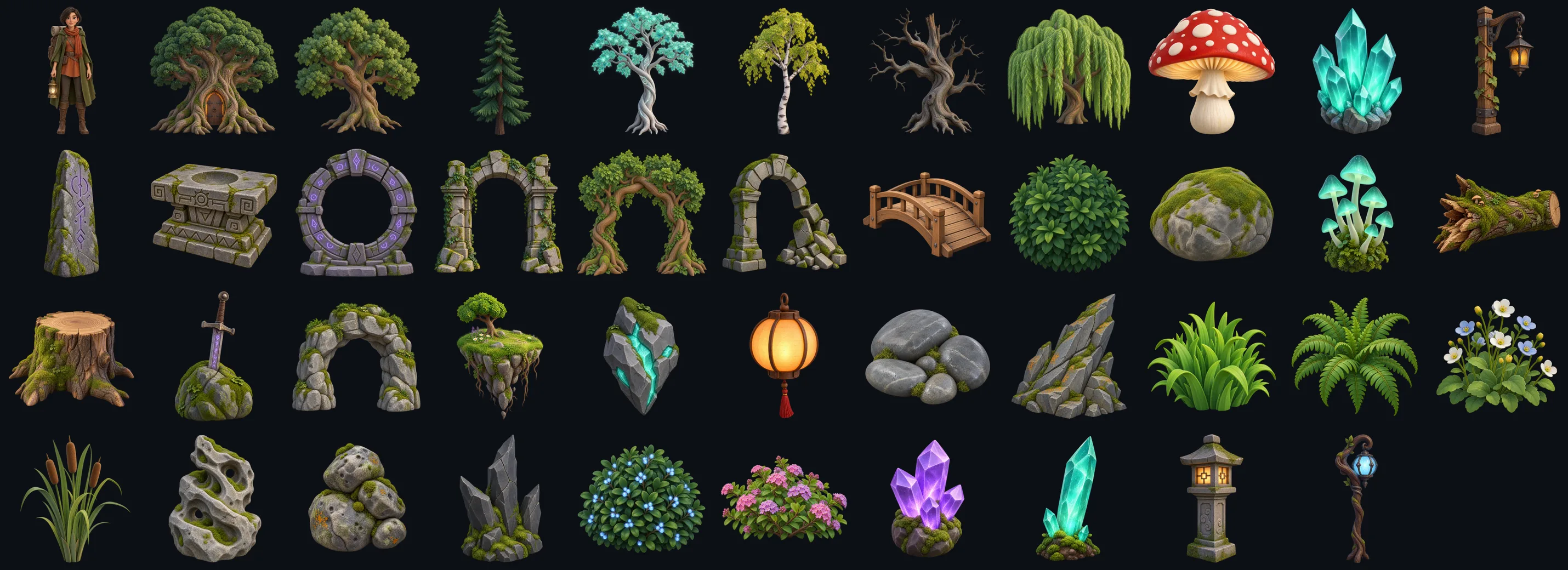
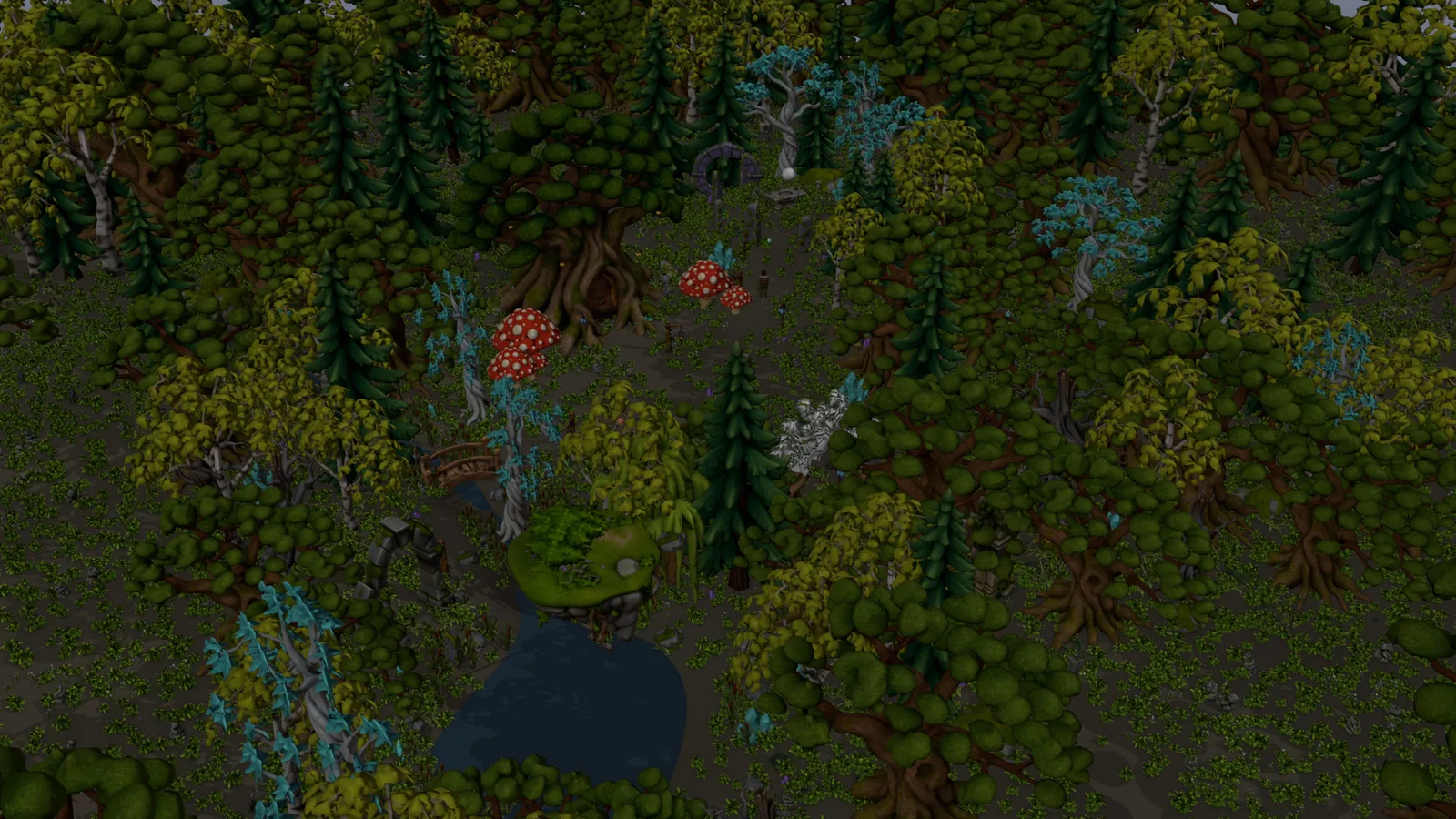
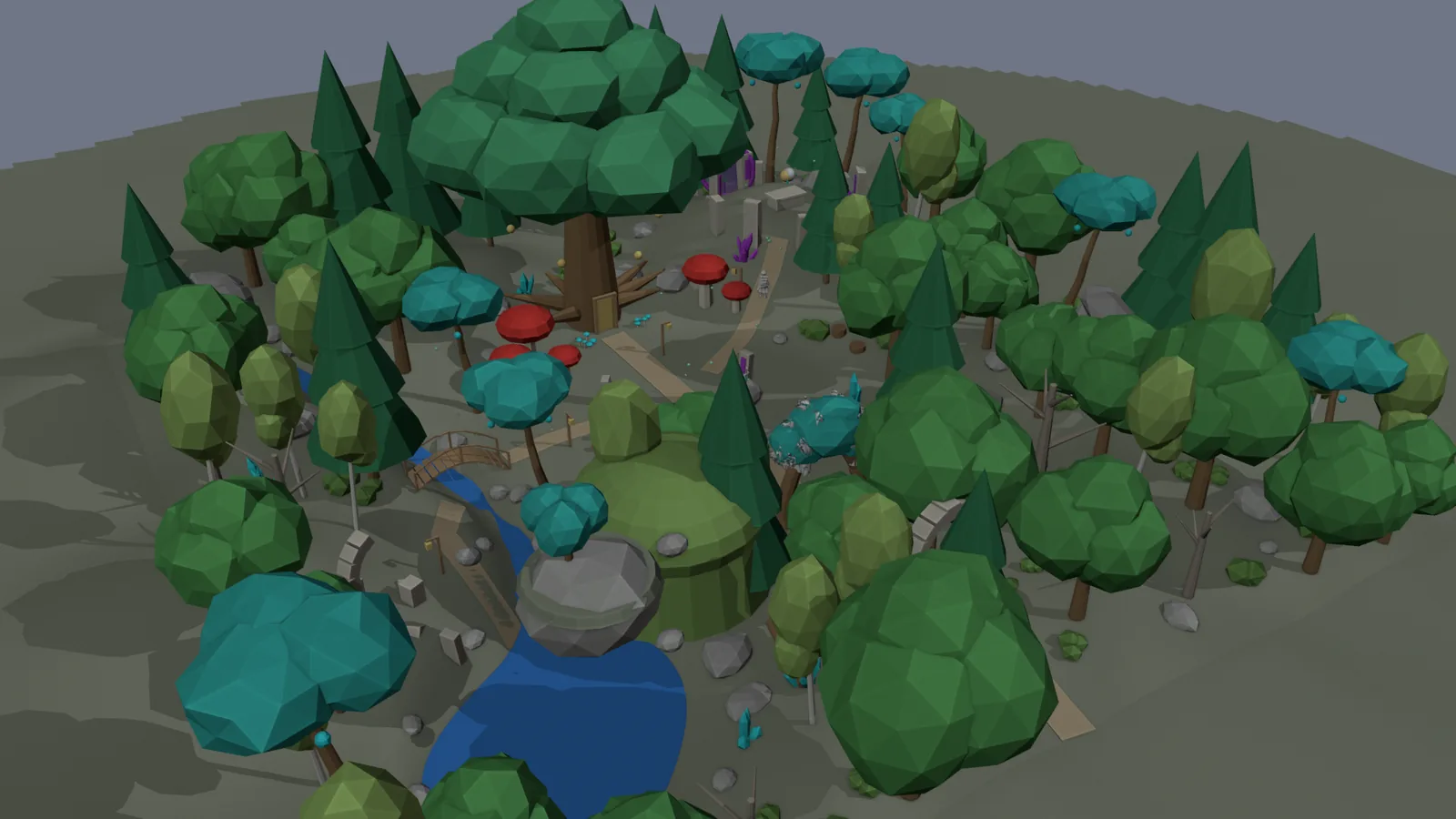
Bushes and boulders first came in 40 to 55 % under the ground, because their blocks were half-buried spheres. The placement script now fits each model to the visible height of its block.
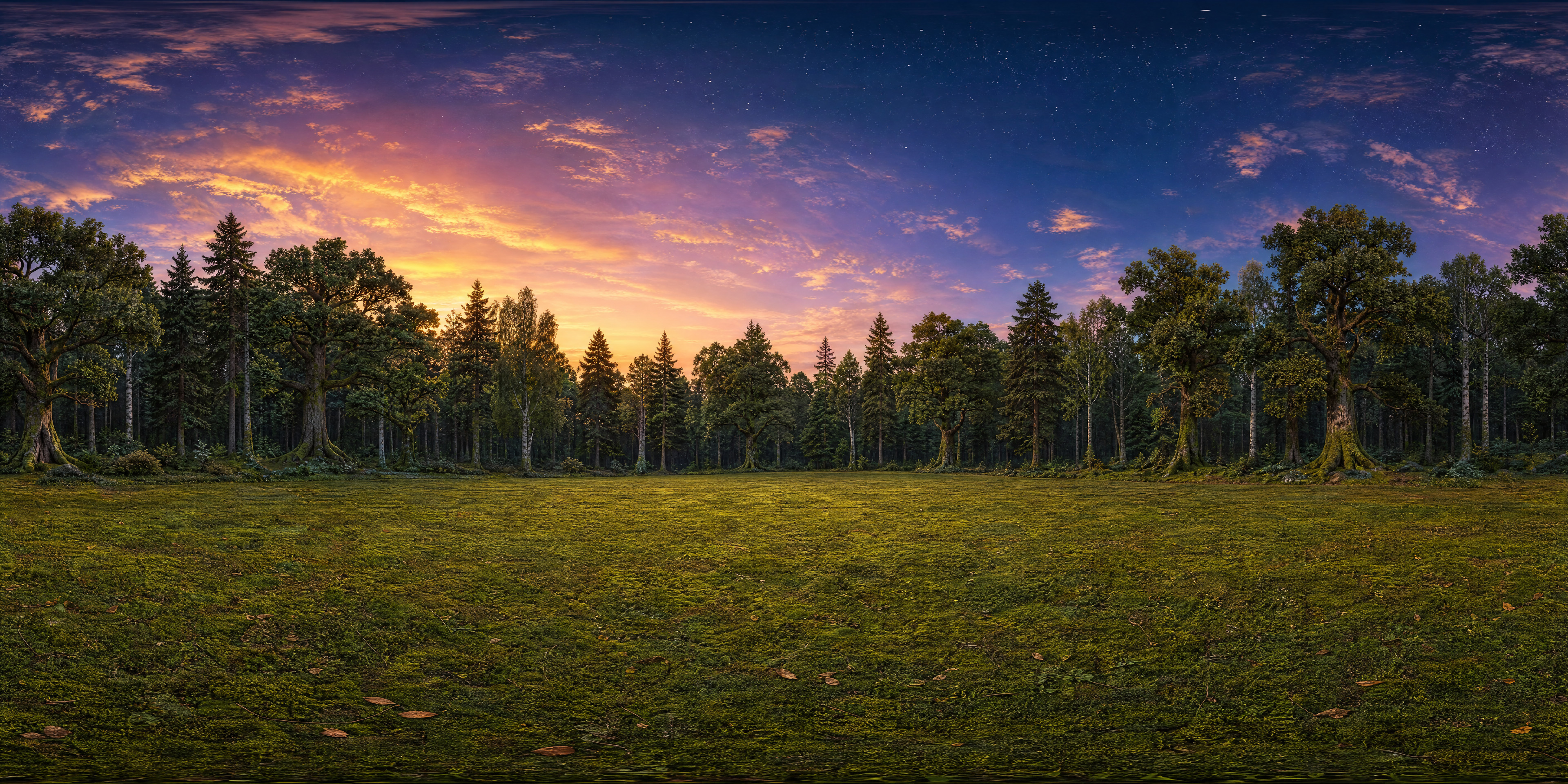
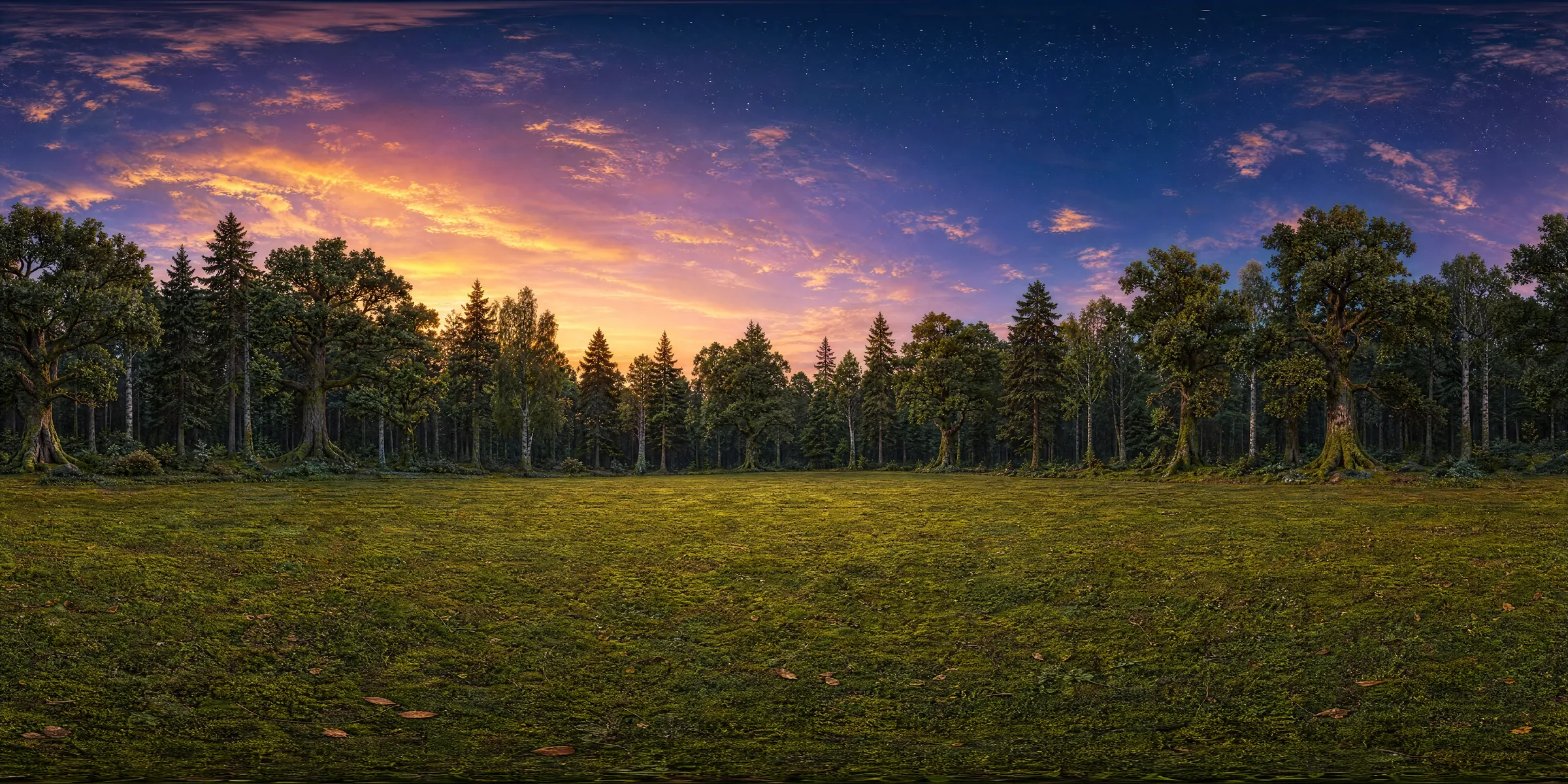
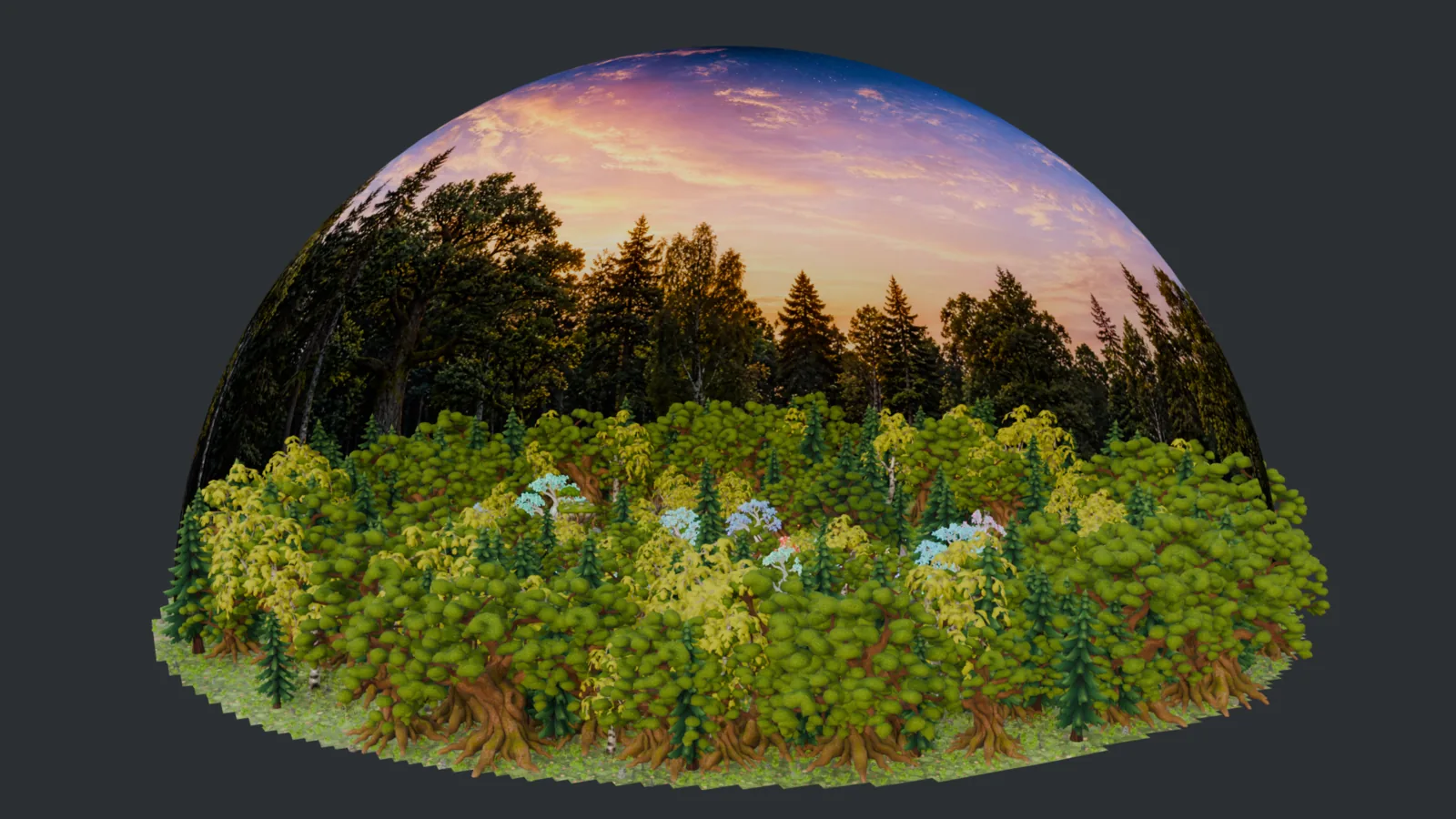
The sky is one panorama from Scenario Skybox GPT, 3840 by 1920 (44 CU), painted from eye level in a round clearing at dusk. It is projected on a 62 m dome from a point 21 m above the floor, so the painted tree bases land on the dome's foot, and the same image lights the scene. A ring of about 250 generated trees carries the edge of the clearing in 3D, with the painted forest behind it. The first sky, seen from above, left the set floating over it; this one puts the set on the floor of the clearing.
06 / Cameras
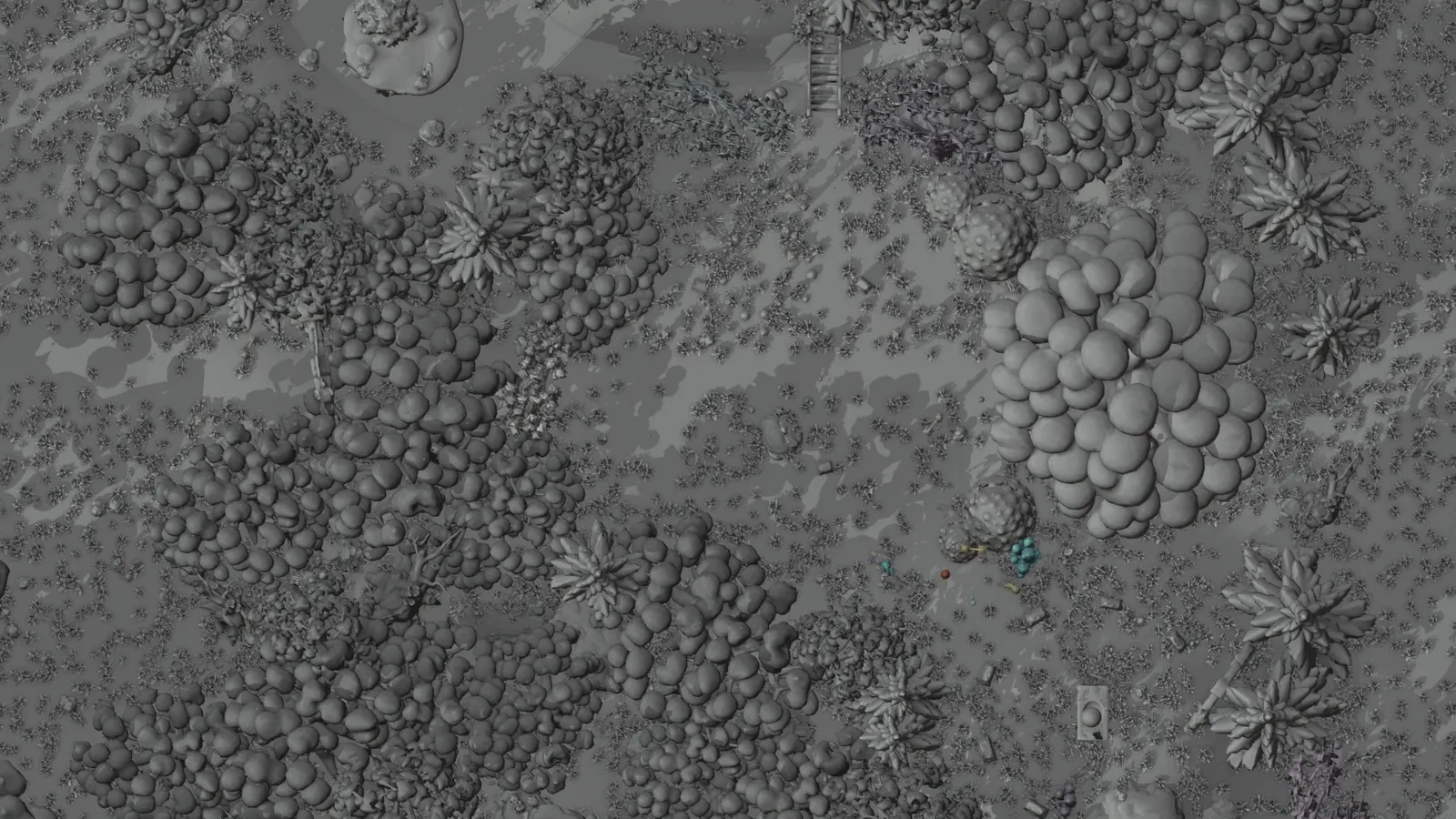
Each beat has a main camera and coverage cameras on the same action at the same frames, so a cut inside a beat matches by construction. A ray-cast audit checks every camera against the set before anything renders. Choose a camera on the map.
07 / Consistency
In the first cut the lantern changed from shot to shot. The fix was a reference sheet for each recurring element, made from its 3D model, then given to every still that shows it. Seedance never sees a sheet: the still already carries the right lantern.
08 / Anatomy of a take
Cut 21: a ground-level tracking shot on the hill path. Seedance 2.5 gets the clay video of the cut as @video1 and one finished still as @image1. The capsule has no arms or legs on purpose: a statue of her slid, and so did a rigged walk. The prompt asks for the walk.
09 / Review
Each review watched the film over its playblast with cut and frame numbers, so every note named a cut and a frame, and every fix was a new take of that cut alone. Four cuts were assembled in under a day. These three notes came from the last review.
Note She carries one lantern, in her right hand. Fix A lamp post beside her read as a second lantern: posts are hidden in that playblast, and the cut gets a new take.
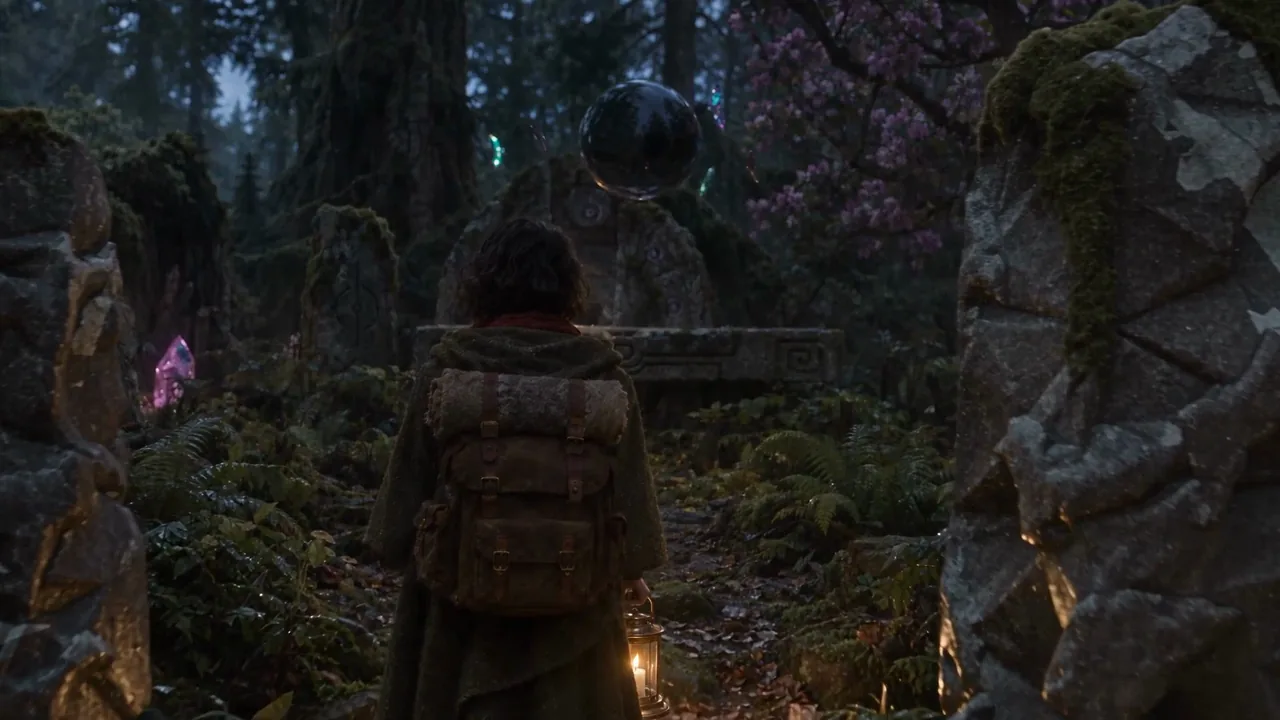
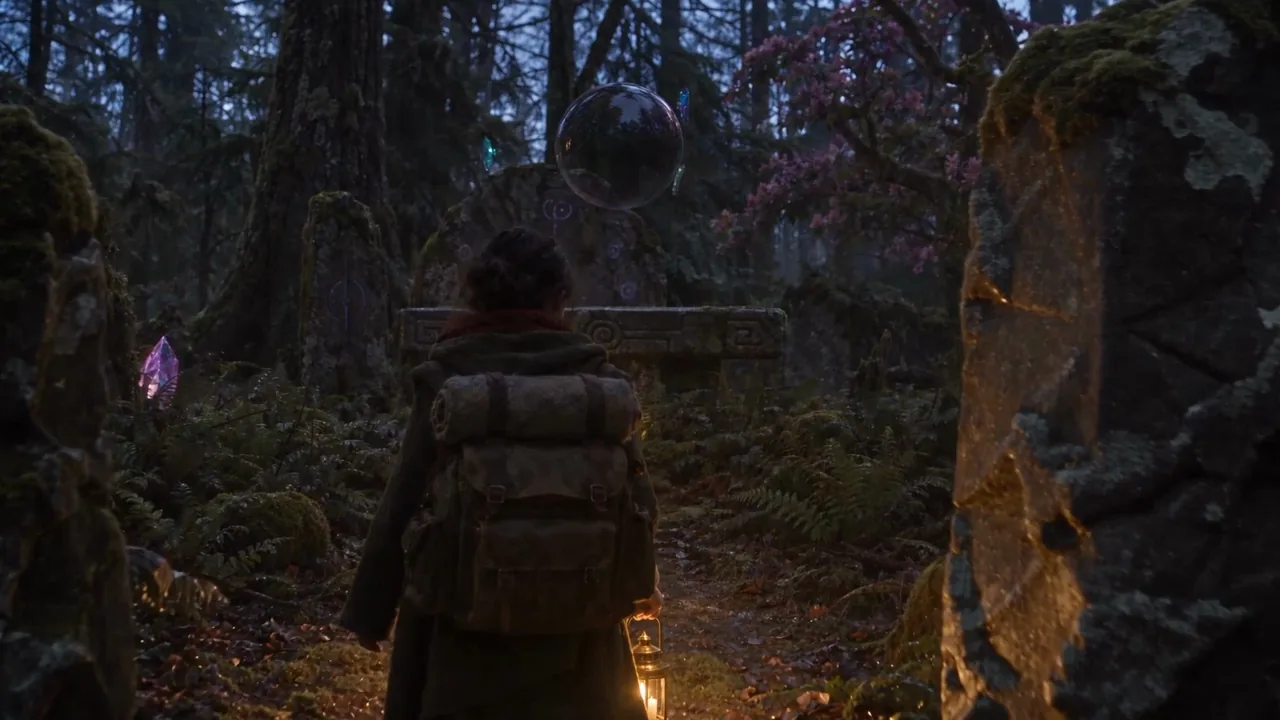
Note Her hair is tied back; the character sheet has it loose. Fix The still prompt now says short dark wavy hair worn loose, never tied back, and the cut gets a new still and take.
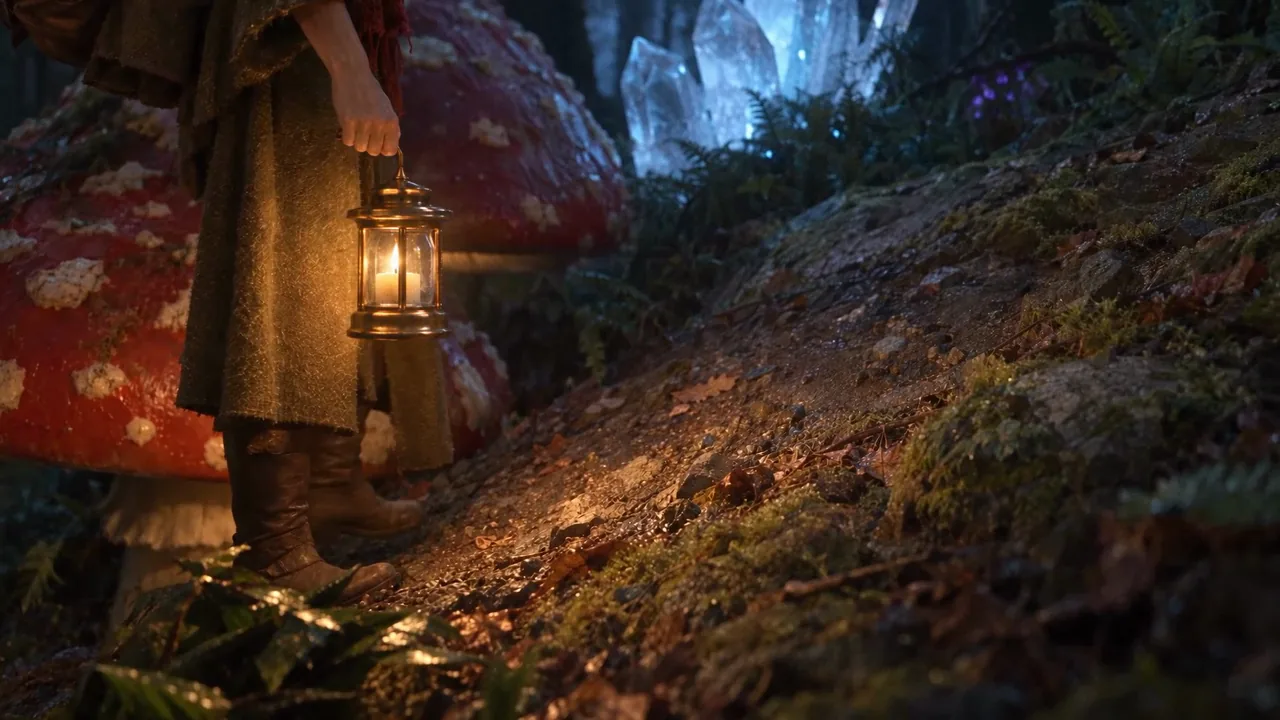
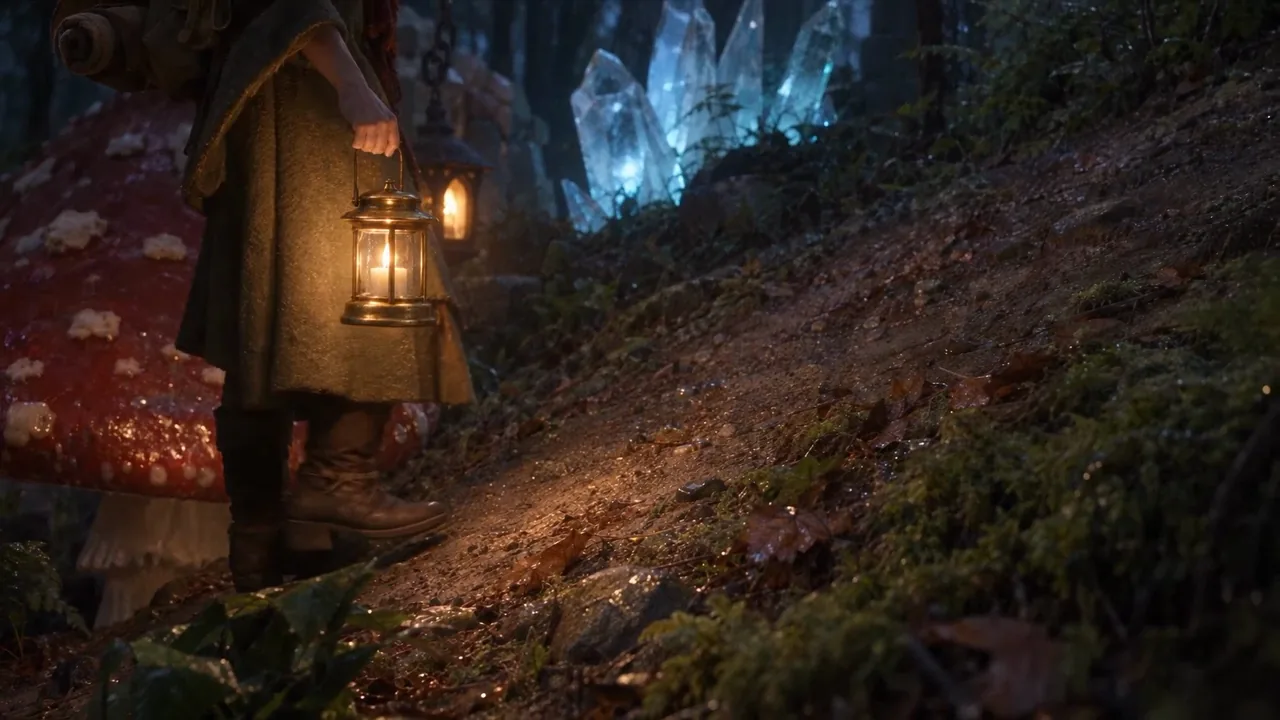
Note She walks too slowly: strides about 25 % longer. Fix The clay of that cut plays 1.25 times faster with the same step cadence, so each stride grows by the same factor.
10 / Sound
Every layer was auditioned against the cut: measured first, then chosen by ear. The narration is cut into 24 phrases on the silences between words, and each phrase starts on the cut that shows what it names. Choose a phrase to hear it in the film.
The same 190-word script was read by ElevenLabs v4, Seed Audio 1.0, Gemini 3.8 Flash TTS and MiniMax Speech 2.8 HD, with voices from a description, a portrait or a reference recording. Each take was ranked on pitch movement, pace and how its phrases landed on their cuts. Five full takes went to a listening review, and Bill on ElevenLabs v4 was chosen.
ElevenLabs Music, Lyria 3.5, MiniMax Music and Sonilo video to music each scored the cut. The second brief has 14 sections at 120 BPM, from the night to the open door. Takes were measured for how they rise and fall with the story, how their accents meet the cuts, and for stray voices with Whisper. The pick, by ear: ElevenLabs Music Advanced v2.5, written section by section.
Twelve ElevenLabs SFX 2 hits sit on the frames of their events: the candle, the door, the orb, the wave. Under them, Sonilo V1.1 generated foley from the picture itself. The pair was chosen by ear over the same hits on a plain forest bed.
Choose a phrase, or press play to hear the film from where it stands.
11 / Make yours
The agent skill walks your agent through the same pipeline with your story, in any style: blockout, models, sheets, stills, playblasts, takes, sound and review. The making-of PDF lists the credits of the final film.
The film, 2:00, 40 cuts
How it was made, 4:21
Model 1 of 12, Tripo 3.1
Drag across the model to turn it. The arrow keys go to the previous and next model.